

Can custom car magnets damage car paint?
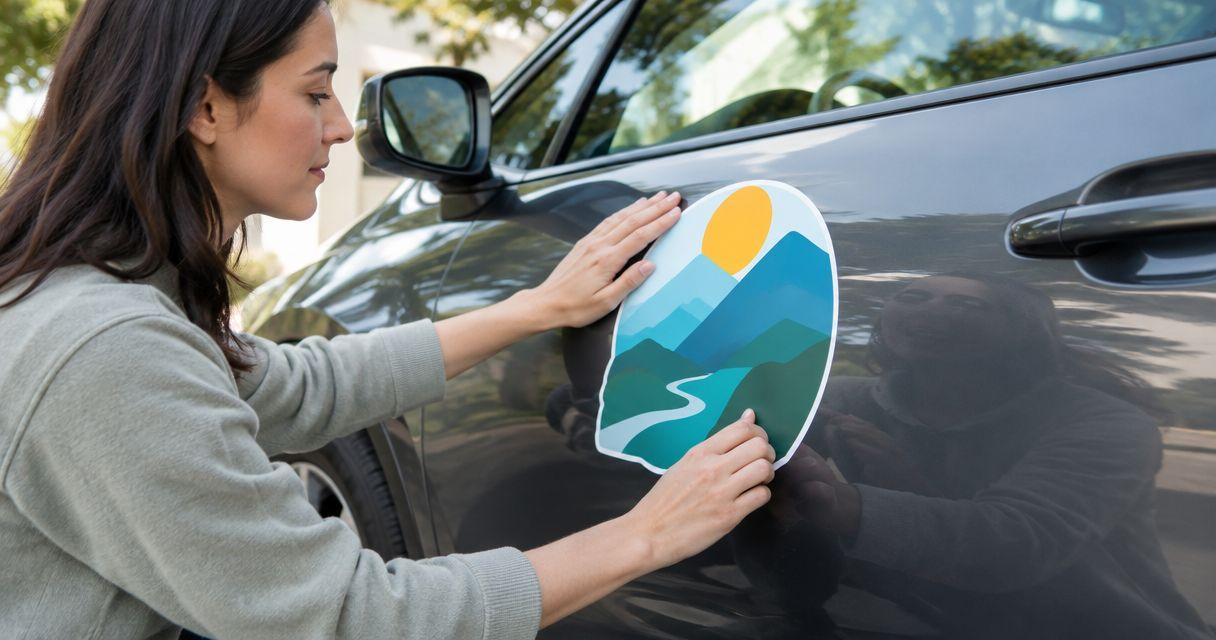
Custom car magnets can damage car paint when grit rubs beneath them, moisture stays trapped, or removal pulls at an already weakened finish. A clean magnet on sound, fully cured paint reduces those risks but does not guarantee damage-free use. Before you order vehicle branding in 2026, check the paint condition, panel material and cleaning instructions—not just the artwork.
- Do custom car magnets damage car paint? Yes—trapped grit, moisture and weakened paint create risks.
- Vinylstatus offers custom magnets; confirm vehicle suitability separately before ordering business signage.
- Use a clean, dry, flat steel panel, and lift magnets rather than sliding them.
- Repainted panels, protective films and textured wraps need specific compatibility advice before use.
Why this matters
A removable business sign still touches your vehicle’s finish. If you switch between work calls and personal driving, repeated fitting and removal make surface preparation part of the job—not an optional finishing step.
Vinylstatus offers custom magnets made from your artwork. For vehicle use, confirm that the particular magnet is intended for cars before choosing its dimensions or approving a design. A good-looking proof does not establish compatibility with your paint.
Choose the mounting surface before you choose the sign size. That prevents an order built around a door panel that is curved, nonmagnetic or unsuitable for contact.
Can custom car magnets damage car paint?
Yes. Custom car magnets can scratch paint through trapped debris, hold moisture against the finish, or expose weaknesses in damaged or incompletely cured paint. Covered and uncovered areas can also weather differently, leaving a visible outline without a scratch.
The useful question is not whether every magnet damages every car. It is whether your particular finish and panel provide suitable contact, and whether you can maintain that contact area.
| Surface or condition | Best for | Practical benefit | Limitation or next move |
|---|---|---|---|
| Sound, fully cured paint on a flat steel panel | Assessing removable vehicle signage | Provides a surface where a suitable magnet can sit flat | Still requires cleaning, drying and inspection |
| Dusty or gritty paint | No installation until cleaned | Cleaning removes abrasive particles before contact | Applying over dirt risks scratching |
| Repainted or repaired panel | Assessment by the refinisher | Professional advice addresses the actual coating | Dry-to-touch paint is not proof of full cure |
| Chipped, peeling or blistered paint | Avoiding contact until assessed | Keeps the magnet away from an existing defect | Removal can disturb weak paint |
| Wrapped or paint-protection-film-covered panel | Checking both manufacturers’ instructions | Confirms requirements for the covering and magnet | Do not assume painted-panel advice applies |
| Aluminum, plastic or composite panel | Choosing another approved mounting approach | Identifies an unsuitable magnetic mounting surface before ordering | A conventional magnet will not attach directly |
For a 2026 order, use the instructions supplied with the exact vehicle magnet. Generic care advice does not replace product-specific limits or the vehicle manufacturer’s guidance.
Sound paint: preparation still matters
Factory paint in good condition is not the same as paint that is safe under every removable accessory. Inspect the intended area in clear light before fitting anything. Look for scratches, chips, flaking clear coat and signs of previous repair.
Clean the panel with a method appropriate for the vehicle’s finish. Clean the magnet’s contact side too: washing the car does nothing about grit already stuck to the back of the sign.
Dry both surfaces before installation. Do not use the magnet to cover a damp patch, and do not assume rainwater cannot reach the contact area later. A clean installation starts with both surfaces, not just the visible paint.
Repainted or damaged paint: get clearance first
A repainted door needs advice from the shop that applied the coating. Ask when the finish is fully cured and whether direct contact with a vehicle magnet is permitted. There is no single waiting period that applies to every repair system and curing process.
Do not treat a smooth surface as evidence that the paint underneath is sound. A repair edge, lifting clear coat or poorly bonded coating creates a different risk from intact paint.
If the finish starts lifting as you remove a magnet, stop. Pulling harder to finish the job can enlarge the damaged area; have the finish assessed instead.
Why the risk of paint damage varies
Paint condition and maintenance matter more than the printed design. Use these factors to decide whether removable signage suits your vehicle and routine:
- Paint condition: Existing chips, peeling clear coat and incomplete curing make contact and removal a concern.
- Trapped debris: Sand, road grit and dirt between the magnet and panel can abrade the finish when they move.
- Moisture: Water beneath the sign keeps the covered area wet until you remove and dry it.
- Panel shape: Curves, creases and trim can prevent full contact, leaving edges lifted or unsupported.
- Exposure: Covered paint and exposed paint receive different amounts of sunlight and weathering, which can produce a visible difference.
- Handling: Sliding, dragging, folding and careless storage introduce avoidable problems before the next installation.
No artwork adjustment fixes these conditions. A smaller logo, different color or thicker border cannot make weakened paint suitable for a magnet.
How do you use a car magnet without scratching the paint?
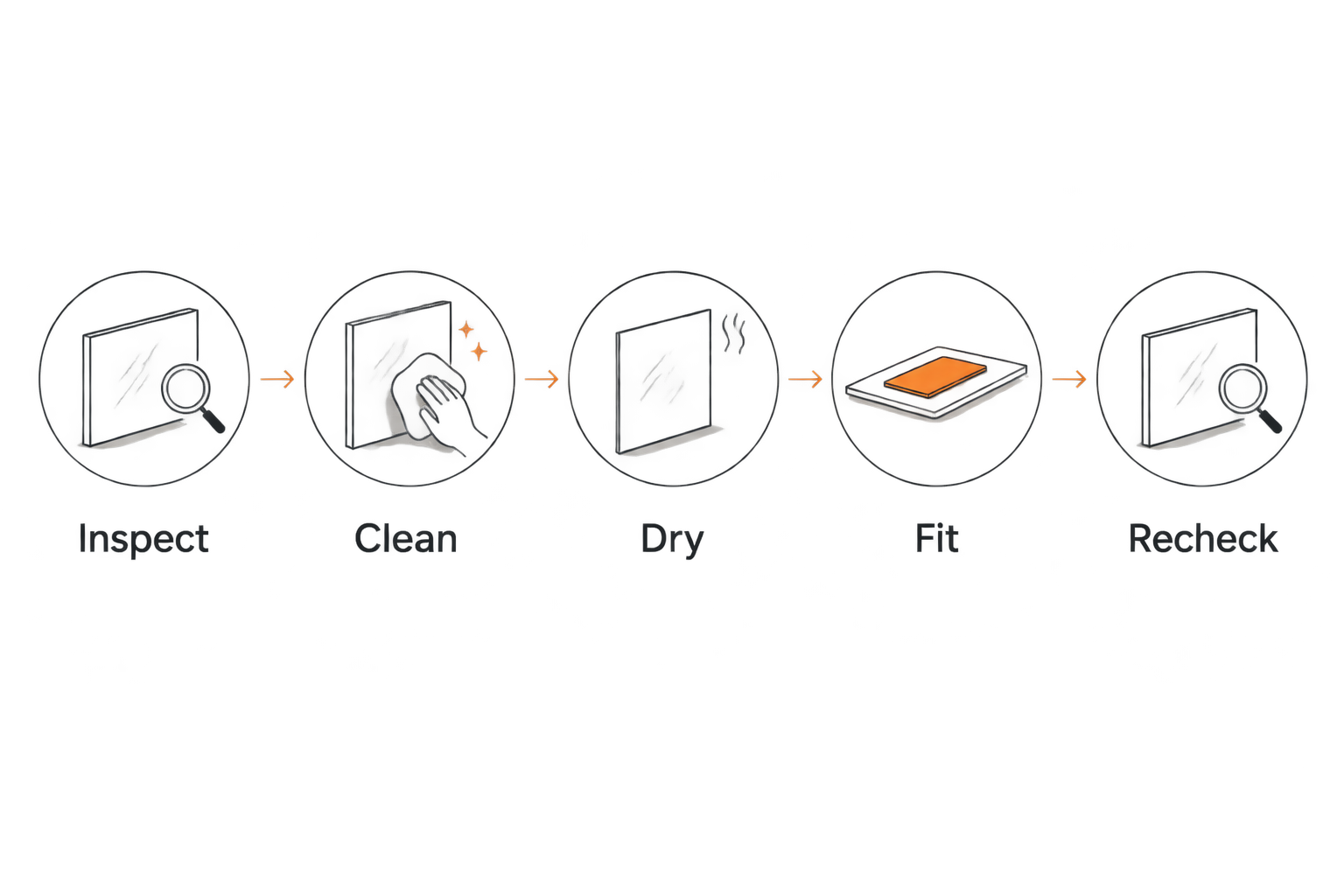
Use a repeatable fitting routine rather than pressing the sign onto whichever panel looks convenient. For your 2026 vehicle-signage checklist, keep surface inspection separate from artwork approval.
Inspect
Check the intended panel and the back of the magnet. Remove loose contamination using suitable cleaning methods, and stop if you find paint defects or damage to the magnet’s contact surface.
Check magnetic attachment on the actual panel, not a nearby part of the vehicle. Different body panels can use different materials. A magnet attaching to one door does not establish that it will attach everywhere else.
Clean
Clean the panel and magnet separately, following their care instructions. Use clean materials suitable for automotive paint, and avoid transferring grit from the contact side back onto the vehicle.
Do not add tape, adhesive, abrasive pads or an improvised backing to improve attachment. Those changes introduce another material against the finish and do not solve an unsuitable panel.
Dry
Dry the paint and contact side before fitting. Check edges and recessed details where water remains after washing, rather than judging dryness only by the center of the panel.
A quick wipe over the printed face is not enough. The surfaces that touch each other are the ones that need attention.
Fit
Place the magnet on a flat area where its entire contact side sits against the panel. Keep it clear of body creases, trim and edges that prevent flush contact.
If the position is wrong, lift the magnet and place it again. Do not slide a car magnet across paint to straighten it. Any particles beneath it move with the sign.
Recheck
Remove the magnet for cleaning and inspection according to its instructions, and whenever conditions call for attention. Check underneath after dirty or wet use rather than relying on the printed face to show a problem.
Look for trapped water, grit, surface marks and lifted corners. If something has changed, resolve the cause before reinstalling.
Can you leave a car magnet on all the time?
Do not treat a vehicle magnet as a fit-and-forget sign. Continuous contact prevents you from seeing trapped dirt, moisture or a developing paint problem.
Follow the magnet manufacturer’s removal and cleaning schedule. If the instructions do not explain vehicle care, ask before use rather than inventing a daily or weekly interval. Weather, road conditions and the vehicle’s finish affect the maintenance required.
For a shared business vehicle, assign responsibility for removing, cleaning and checking the signs. A routine that depends on everyone noticing a problem often means nobody checks underneath.
Should you remove car magnets before washing your car?
Remove vehicle magnets before washing unless the product and vehicle instructions explicitly permit otherwise. Removal lets you clean the covered paint and inspect the contact side instead of leaving a dirty patch beneath the sign.
Keep pressure-washer jets and car-wash brushes away from loose magnet edges. Follow the wash equipment’s instructions, and do not rely on magnetic attachment to withstand every washing method.
Clean and dry the sign before putting it back. Store it as directed while it is off the vehicle; avoid folding or creasing it, and keep its contact side away from grit.
How should a small business plan a vehicle magnet order?
For a 2026 business order, settle fit and compatibility before spending time on artwork revisions. Vinylstatus custom magnets suit small businesses that want to order from their own artwork; vehicle compatibility requires a separate check.
That distinction matters if your team uses several vehicles. Identical artwork does not mean identical usable panel space, paint condition or body material.
Use this ordering checklist:
- Confirm intended use: Ask whether the selected magnet is designed for exterior vehicle use.
- Measure the flat area: Record usable space clear of trim, handles, creases and damaged paint.
- Check every vehicle: Do not base a fleet order on the first suitable door.
- Choose readable artwork: Prioritize the business name and a clear contact detail over a crowded service list.
- Review the proof: Check spelling, layout, orientation and final dimensions against your measurements.
- Plan handling: Decide who removes, cleans, inspects and stores the signs.
A proof checks the printed design, not the condition of your car. Keep both approvals separate: artwork approval for the sign, and suitability confirmation for the mounting surface.
Use the contact page to ask about intended vehicle use and care instructions before ordering. Describe the panel material and finish accurately, including repainting, wraps or protective film.
FAQ
Do custom car magnets damage car paint even if they have no adhesive?
Yes, custom car magnets can damage paint without adhesive. Trapped grit can scratch the finish, moisture can remain underneath, and removal can disturb weakened paint.
Can I put a car magnet on a freshly painted door?
Do not put a car magnet on a freshly painted door until the refinisher confirms the coating is fully cured and suitable for magnetic signage. Dry-to-touch paint is not confirmation of full cure.
Will a custom car magnet stick to an aluminum car panel?
A conventional car magnet will not attach directly to an aluminum panel. Check the exact mounting area because body-panel materials can differ across the same vehicle.
How often should I take a car magnet off to clean underneath?
Follow the removal and cleaning schedule supplied with the vehicle magnet. Inspect sooner when wet or dirty conditions create a reason to check underneath.
Can I slide a car magnet to straighten it?
Do not slide a car magnet across painted bodywork. Lift and reposition it so any trapped particles are not dragged along the finish.
Why is there a different-colored patch under my car magnet?
Covered and uncovered paint can weather differently, leaving a visible outline or color difference. Clean the area appropriately and have persistent changes assessed rather than assuming the mark is adhesive residue.
Can I use a vehicle magnet over a wrap or protective film?
Use a vehicle magnet over a wrap or protective film only when the relevant manufacturers confirm compatibility. The covering changes the contact surface, so guidance for bare painted panels is not enough.
One last thing
A clean-looking outline is not always a scratch. Shielding one area from sunlight while the surrounding paint remains exposed can leave a visible difference, even when removal does not scrape the finish.
Before your next 2026 order, take a clear reference photo of the clean mounting area. It gives you a practical comparison during later inspections, especially when different employees handle the same vehicle. Stop using the sign if you find a change that cleaning does not resolve.
Related guides
- Custom die-cut stickers for food trucks and trailers
- Waterproof vs. regular stickers: what matters outside
- How to order custom stickers online: artwork to approval