

Custom rectangle stickers for subscription boxes: complete 2026 guide
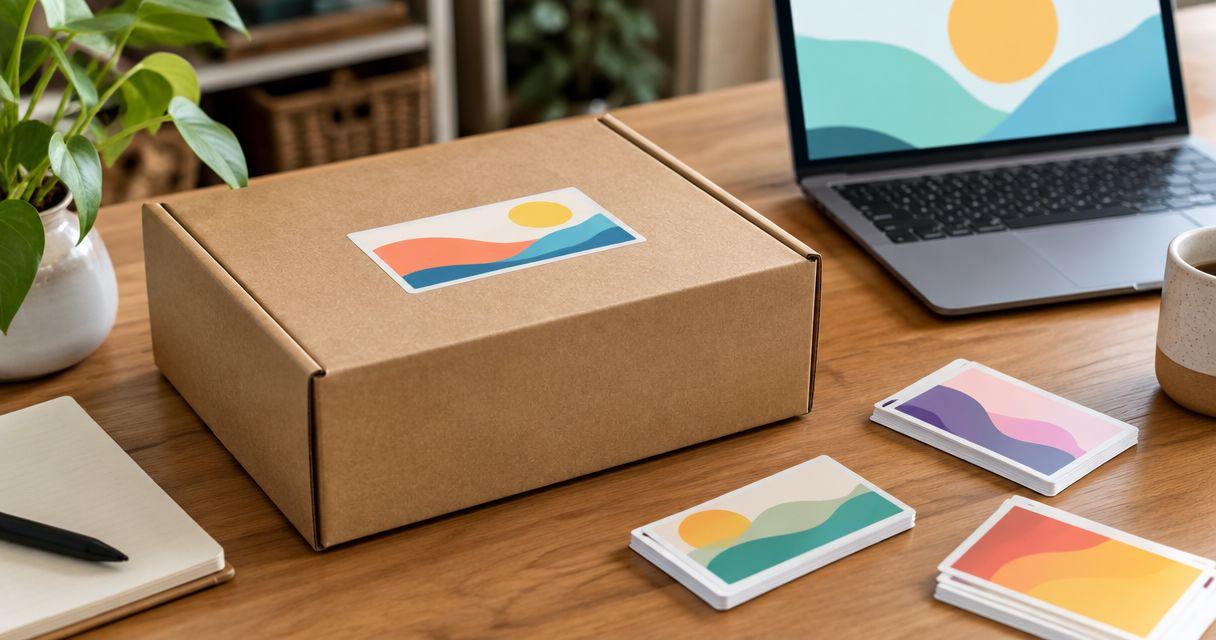
Subscription-box custom rectangle stickers are printed packaging labels that give a recurring shipment a consistent identity while leaving room for a wide logo, short message, or product detail. This guide explains how to order custom rectangle stickers for subscription boxes in 2026 without choosing a size, finish, or quantity that creates packing problems.
- Choose custom rectangle stickers for subscription boxes when a wide logo or short message fits a flat panel.
- Vinylstatus suits small businesses ordering custom printed stickers from their own artwork.
- Check packaging labels at actual size before proof approval; readable artwork matters more than filling every corner.
- Calculate quantities from confirmed shipments, application locations, replacements, and artwork changes—not an arbitrary bulk target.
Why rectangle stickers matter for subscription boxes
Subscription packaging has two jobs: identify the business and move through a repeatable packing process. A rectangle gives horizontal artwork a natural footprint, but the shape only works when the box has enough uninterrupted space for it.
Your recurring shipments also create an artwork problem. A permanent logo can stay useful across multiple releases; a month-specific message becomes obsolete when that shipment closes. Separate lasting brand information from details that change with each box.
Start with the placement rather than the shape you prefer on screen. The circle or rectangle stickers comparison helps you assess whether the available panel suits a horizontal label or a compact mark.
For your 2026 packaging plan, keep exterior branding, shipping information, and opening instructions distinct. A decorative sticker should not cover an address, barcode, required warning, or carrier label.
How to plan a useful rectangle sticker order
1. Assign each sticker a specific job
Decide what the sticker must accomplish before opening the design file. Exterior identification, tissue closure, an insert label, and a customer giveaway are different applications. Combining them into one design usually creates competing requirements.
An exterior logo needs clear recognition. A tissue closure needs a suitable application surface. A giveaway needs artwork that makes sense after the customer separates it from the packaging. Do not assume that a decorative closure is tamper-evident or suitable for securing a shipping carton.
Write a short purpose statement for each design. If two purposes require different wording or placement, treat them as separate ordering decisions.
- Exterior branding: Keep the business name readable beside shipping information.
- Tissue closure: Test the complete closing and opening action.
- Insert label: Reserve space for the message the customer needs.
- Giveaway: Remove shipment-specific instructions from the artwork.
2. Measure the finished package, not the flat box
Assemble the actual box with its normal contents before measuring. Folded edges, lid movement, seams, and surrounding labels determine the usable area. A large empty panel on a flat blank can become a poor placement once the carton is packed.
Make paper mockups at the dimensions you are considering. A 3 × 2-inch rectangle and a 4 × 2-inch rectangle are useful test sizes, not statements about available order sizes. Confirm the selected dimensions before submitting artwork.
Hold each mockup against the packed box and view it from the distance customers first see it. Leave clearance around edges instead of treating the whole panel as printable sticker space.
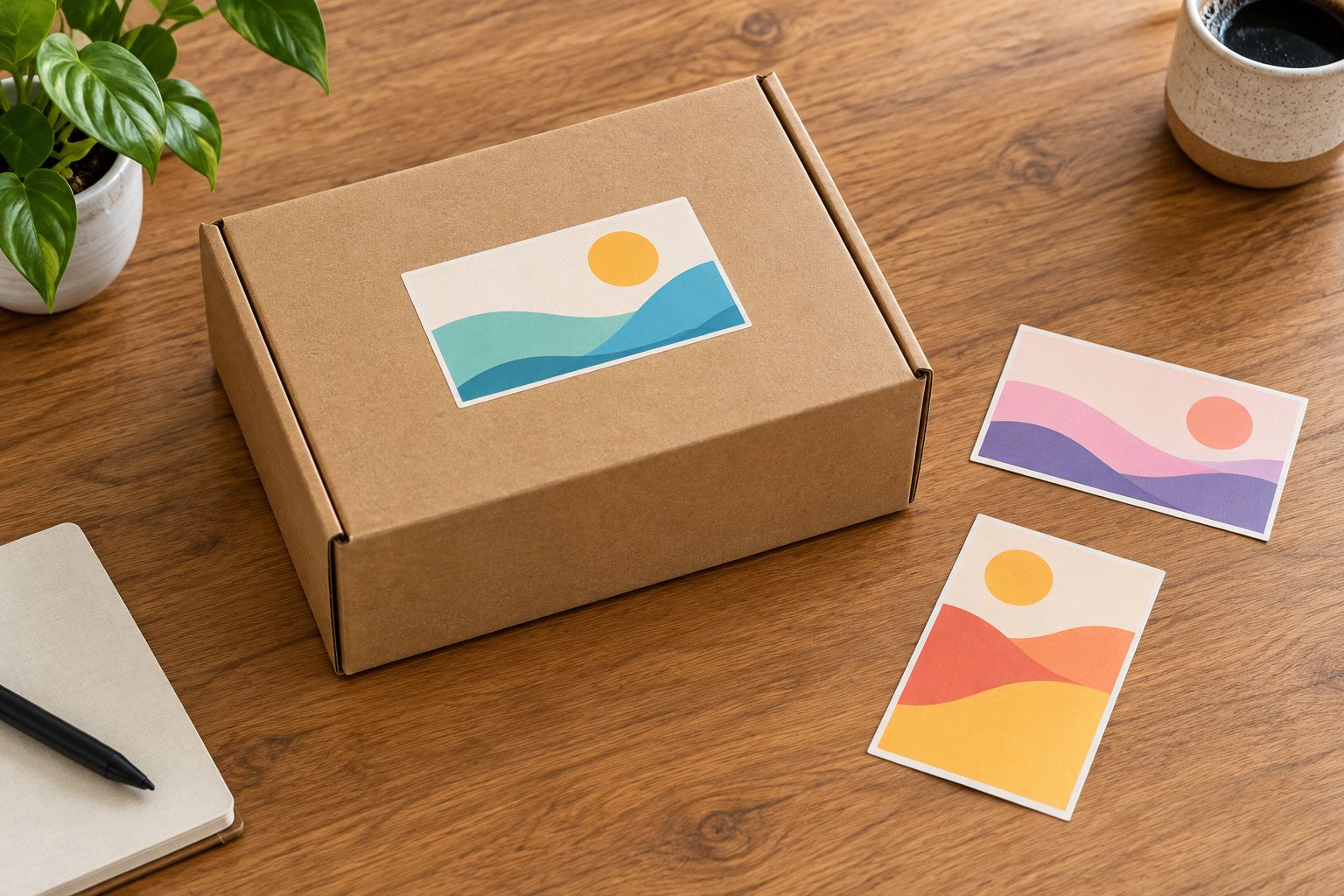
Test the preferred footprint on every box format in the order. One dimension does not automatically suit both a narrow mailer and a broad carton.
- Measure the uninterrupted application area.
- Mock up a 3 × 2-inch option and a 4 × 2-inch option.
- Keep edges clear of folds, seams, and opening tabs.
- Photograph the placement beside the shipping label.
3. Match the finish and construction to the task
Choose the visual finish and application format separately. Matte versus glossy concerns appearance and reflected light; the liner concerns how the sticker separates from its backing. Neither choice replaces a test on your actual packaging.
Vinylstatus offers custom printed stickers from customer artwork. For a rectangle order, confirm the cut shape, dimensions, finish, liner construction, and proof process before committing. The ability to submit artwork does not answer every packaging question.
Vinylstatus is a fit for small businesses ordering custom printed stickers from their own artwork. The limitation is application-specific: a print order still needs your approval of the size, content, and intended use.
- Ask whether an online proof and human artwork check are included.
- Confirm whether the selected printed sticker uses a split-back liner.
- Compare matte and glossy samples under packing-area lighting.
- Request confirmation of the intended packaging surface.
4. Build artwork around the final rectangle
Set up the artwork for the selected dimensions rather than stretching an existing logo to fill the space. Stretching changes proportions. Enlarging a small raster image does not restore missing detail.
Use vector logo artwork when available, and follow the printer's file requirements. Keep essential text inside the supplied safe area and extend edge-to-edge backgrounds according to the printer's bleed instructions. Do not invent bleed measurements when the supplier provides a template.
For recurring 2026 shipments, keep the master logo artwork separate from seasonal copy. That makes it easier to update a campaign without accidentally changing the approved brand mark.
The artwork-to-approval ordering guide covers the broader handoff. Your rectangle-specific priority is preserving readable spacing inside a relatively shallow layout.
- Keep the logo proportions unchanged.
- Remove text that repeats information elsewhere on the box.
- Preserve the printer's required safe area and bleed.
- Name files by design, dimensions, and revision.
5. Review the proof as a packing decision
A proof is not just a spelling check. Review the dimensions, orientation, cut boundary, placement of small text, and relationship between the printed artwork and the sticker edge. Compare it with the physical mockup you already tested.
Assign one person to approve the final version. Conflicting feedback from several people creates uncertainty about which file is authorized. Save the approval record with the artwork so the next order has a clear reference.
If the design includes a QR code, test the encoded destination before approval and test a physical printed sample before committing to the full application. Keep the code away from folds and preserve its clear surrounding area.
- Read every word, including small secondary text.
- Check the finished dimensions and orientation.
- Confirm the cut line does not crowd important artwork.
- Record the approved file and approver.
6. Calculate quantity from the shipment plan
Build the order around how stickers will actually be consumed. Count the locations receiving a sticker, then separate ordinary shipments from replacements, photography samples, and planned promotions. Keep any contingency quantity visible rather than hiding it inside a rounded total.
Use confirmed demand for dated artwork. A January-specific design has a different useful life from an evergreen logo, even when both fit the same box. For your 2026 plan, connect each design to the last shipment that can use it.
Separate the commitment to small-batch custom gift boxes from the sticker quantity: a trial packaging run needs its own label forecast, not the full-season volume assigned to an established box. Changing the carton can also change the usable sticker area.
- Count shipments by packaging format.
- Multiply by the sticker locations on each shipment.
- Add separately documented replacement and sample needs.
- Exclude future releases that require different artwork.
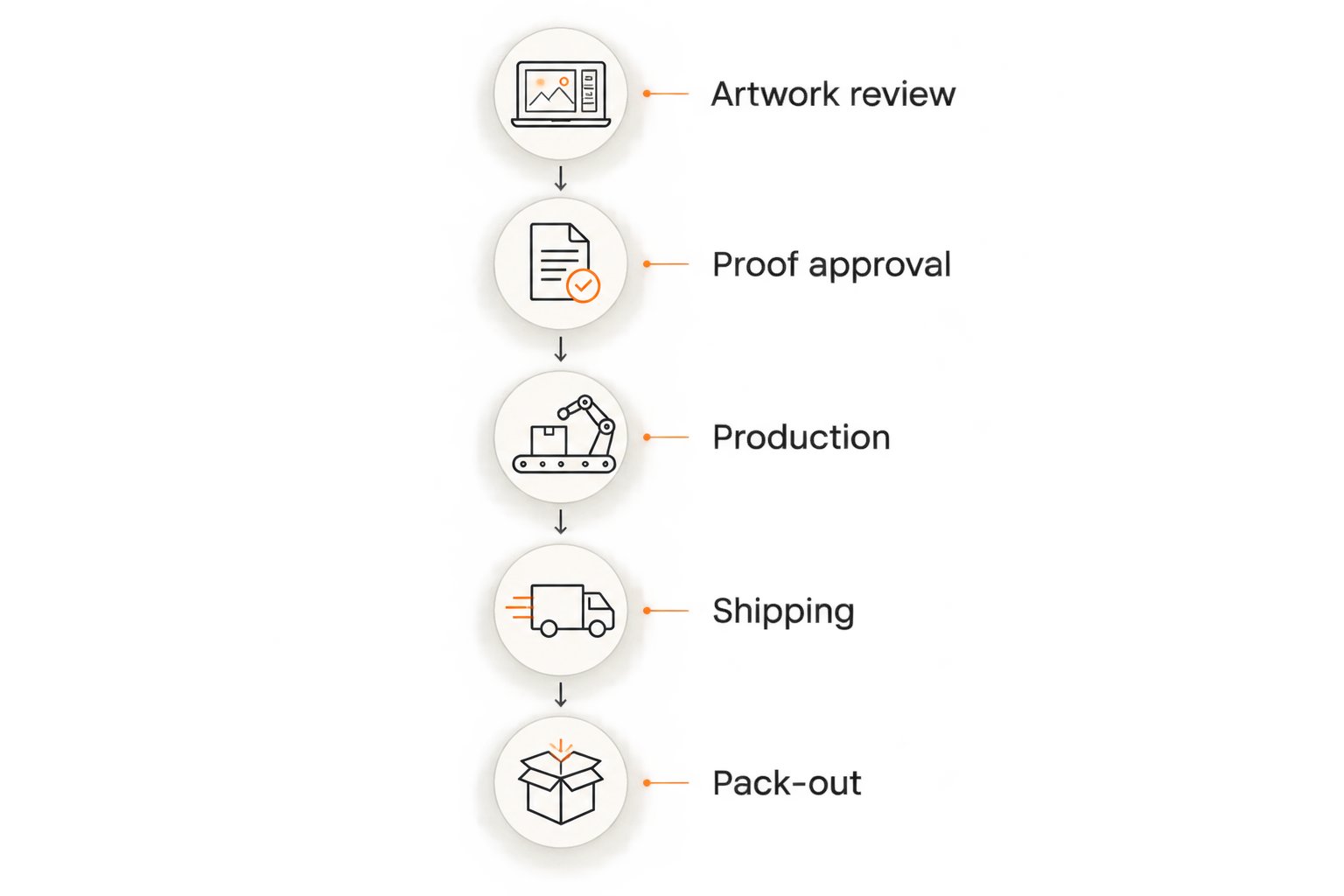
7. Schedule approval, production, and delivery separately
Work backward from the packing date, not the customer-facing launch date. You need the stickers before the packing team starts applying them. A production duration is not a delivery promise, and proof approval is a separate milestone.
Ask Vinylstatus to confirm the production timing for the selected order, when that timing begins, and the shipping estimate. Do not treat a general turnaround statement as the arrival date for your specific shipment.
Keep the 2026 release calendar beside the approval record. If a proof changes, review the schedule again rather than assuming the original packing date still works.
- Artwork review: Resolve file questions before approval.
- Proof approval: Record the authorized version.
- Production: Confirm the applicable production window.
- Shipping: Keep transit separate from production.
- Pack-out: Allow time to inspect and apply the stickers.
Compare sticker shapes for subscription packaging
Choose the shape that fits the message and application area. These options describe layout trade-offs, not a claim that one shape performs better on every box. Your artwork and physical mockup should settle the decision.
| Option | Best for | Practical advantage | Key limitation |
|---|---|---|---|
| Rectangle sticker | Wide logos, short horizontal messages, flat box panels | Gives horizontal content a natural layout | Can crowd narrow panels or cross folds if oversized |
| Circle sticker | Compact brand marks and centered layouts | Suits artwork built around a central point | Wide logos leave unused space above and below |
| Custom die-cut sticker | Artwork whose outline is part of its identity | Follows the selected artwork silhouette | Complex outlines need careful size and handling checks |
A rectangle wins when the information is naturally horizontal. A circle wins when the mark is compact. A custom die-cut shape earns its place when the outline contributes something a standard geometric shape does not.
Do not select a shape solely because it looks distinctive in a digital preview. The practical test is whether the finished sticker fits the box, reads clearly, and works during packing.
Common mistakes subscription-box businesses make
Reusing one size across every carton
A sticker that fits the main subscription box can overwhelm a smaller replacement mailer. Check each packaging format independently. Keep a placement photo with the packing instructions so staff do not improvise around seams or shipping labels.
Putting the whole campaign on the exterior sticker
A logo, theme title, social handle, opening instruction, QR code, and promotional message compete for limited space. Keep the exterior focused on recognition. Put longer explanations on the insert or another surface designed to carry them.
Ordering dated artwork like evergreen branding
A month-specific sticker stops being useful when that release ends. Order it against the relevant shipment plan rather than the annual subscriber ambition. Keep an evergreen design available in your artwork library for orders that do not need seasonal copy.
Approving the image but ignoring application
A clean proof does not show how a liner peels during packing or how a sticker sits on the actual carton. Test the handling process and application location. If staff struggle with alignment, reconsider the size or placement before increasing the quantity.
FAQ
What size rectangle sticker should I use on a subscription box?
Choose the size from the uninterrupted area on the assembled box. Compare paper mockups at actual size, keep the sticker clear of folds and shipping information, and confirm the final dimensions before ordering.
Are rectangle stickers better than circle stickers for subscription packaging?
Rectangle stickers suit wide logos and horizontal messages; circle stickers suit compact, centered marks. Neither shape is automatically better, so compare both against your artwork and the available panel.
Should I choose matte or glossy stickers for my subscription boxes?
Choose the finish after comparing the artwork under the lighting where the box will be packed and viewed. Matte reduces reflected glare compared with a glossy surface, while the final decision also depends on the appearance you want and the available product options.
Can I use a rectangle sticker to seal a subscription box?
Do not assume a decorative rectangle sticker can replace the shipping closure. Confirm the intended use and test the actual package; decorative closure, carton security, and tamper evidence are different requirements.
How many stickers should I order for a monthly subscription shipment?
Calculate the quantity from planned shipments multiplied by sticker locations, then add documented replacement and sample needs. Keep dated designs separate from evergreen logos so unused campaign stickers do not drive the next order.
What should I check before approving a sticker proof?
Check the dimensions, orientation, spelling, cut boundary, safe area, and artwork version. Compare the proof with your physical placement mockup and record who approved the final file.
Does sticker production time include shipping?
Treat production and shipping as separate schedule stages. Confirm when production begins for the selected order and obtain the shipping estimate before setting the packing date.
One last thing
Make the packing test part of the design approval. Hand an assembled box and a mockup to the person who will apply the stickers, without explaining the placement first.
If the intended position is unclear, improve the packing instruction or change the layout. A placement photo beside the approved artwork gives your next Vinylstatus custom sticker order a repeatable reference, not just an attractive file.
Related guides
- Custom rectangle stickers for product labels
- Custom stickers for seasonal and holiday packaging
- Bulk custom stickers for small businesses: an ordering guide