

Custom stickers for candles and small-batch products
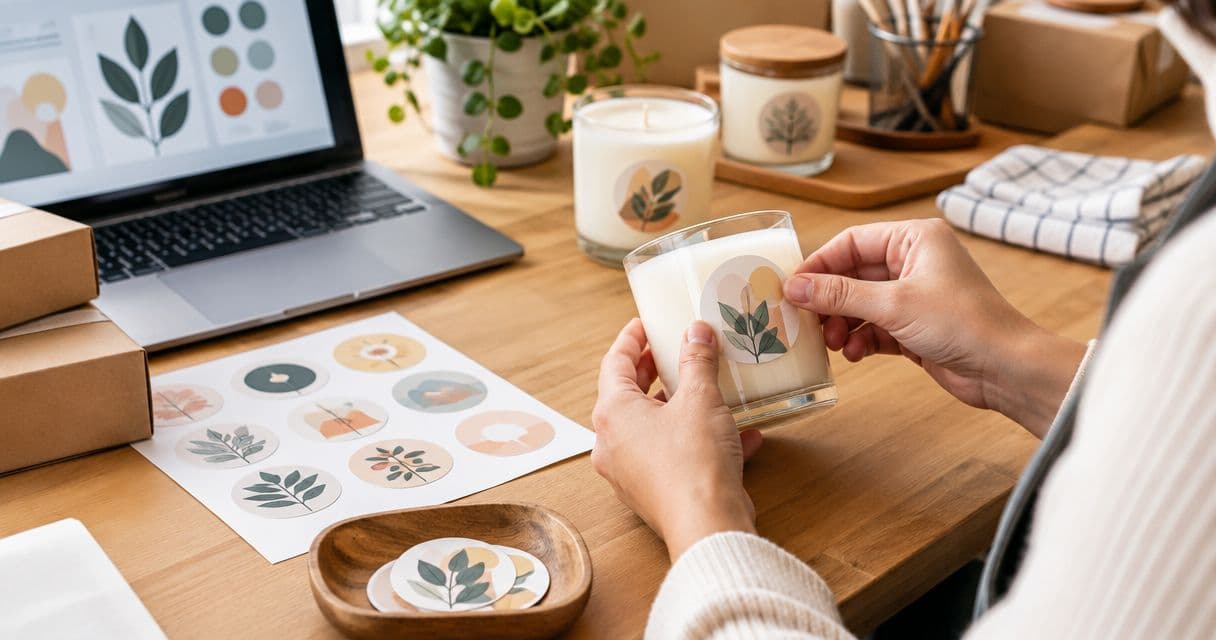
Candle makers’ custom stickers are printed labels made from your artwork to identify candles and small-batch products, with the aim of making each item recognizable and ready to sell. Choose custom stickers for candles around the actual vessel, required product information, and application surface—not just the logo on your screen.
- Vinyl Status suits small businesses ordering custom stickers for candles from their own artwork.
- Choose candle labels and packaging stickers separately; each placement has a different job.
- Check a full-size mockup before approving artwork, especially on curved jars.
- Plan production after proof approval, then allow additional shipping time.
Why custom stickers matter for candle makers
A candle label has limited space to identify your business, distinguish the scent, and present the information you need on that particular surface. A giveaway sticker has a different job. Trying to make one design handle both creates avoidable compromises.
For your 2026 range, separate permanent brand artwork from details that change between batches. Scent names, seasonal designs, and product variations deserve attention before you decide quantities. Otherwise, a large order can leave you with labels that no longer match what you sell.
A decorative sticker is not a substitute for appropriate candle safety labeling. Confirm the requirements for your product and selling market separately. If you need a supplier to confirm a particular surface or application, describe those application requirements before placing the order.
How to order custom stickers for candles
Define each sticker’s job
Start with a paper list of every place you expect to apply a sticker. Separate the candle vessel, lid, outer box, shipping package, and giveaway insert. Each location needs its own decision about content and shape.
Use 1 primary job per sticker as your planning rule. A front label identifies the candle. A box sticker identifies the packaged product. A promotional sticker gives the buyer something to keep. Combining these roles is reasonable only when the same artwork genuinely works in each location.
For small-batch products beyond candles, repeat this exercise for each container. A jar label that fits well does not establish that the same design works on a narrow bottle or a folded pouch.
- Name the placement: vessel, lid, box, or giveaway.
- Write the information that placement must carry.
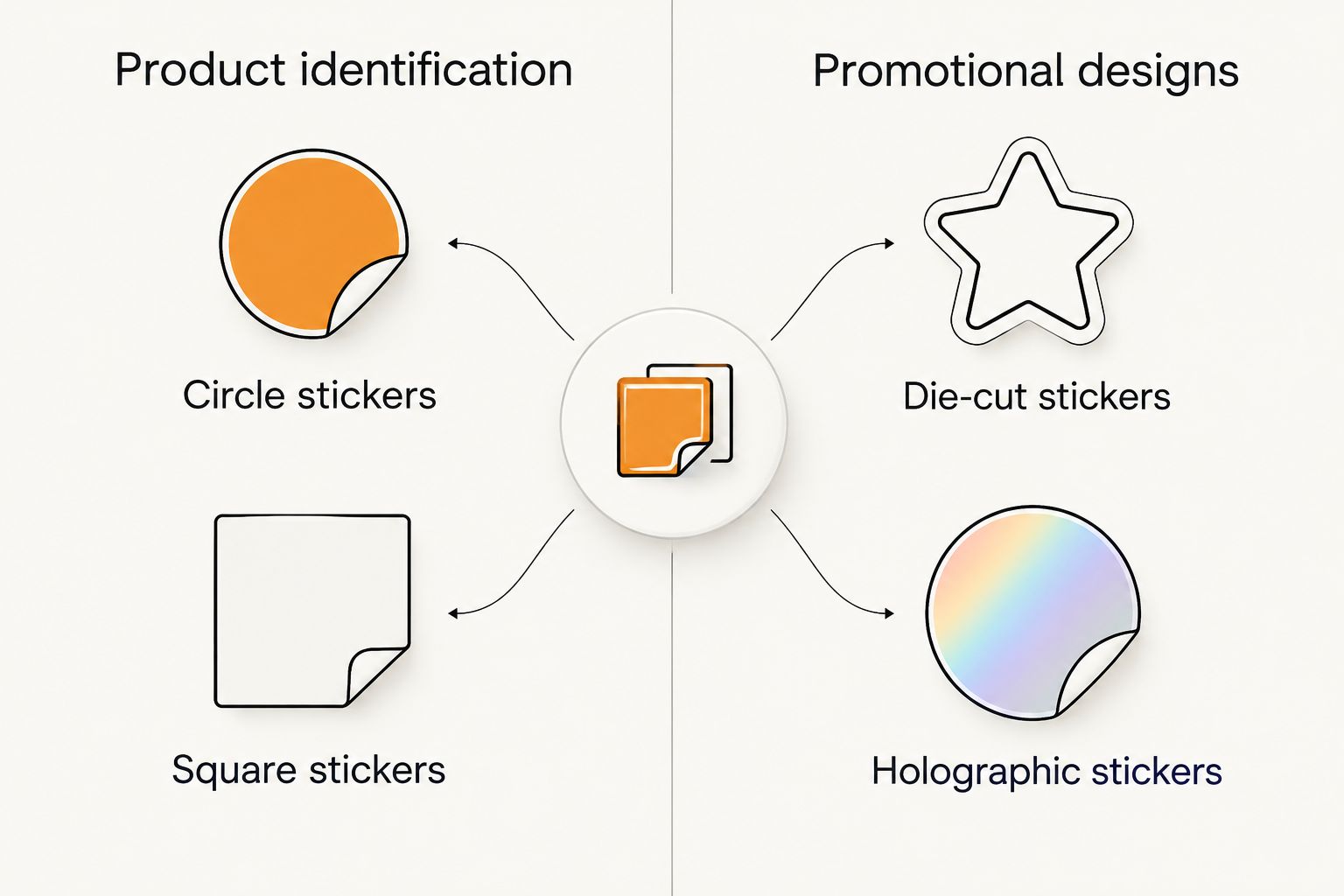
- Separate product identification from promotional artwork.
- Keep safety and other required labeling in the plan.
Measure the usable area on the actual container
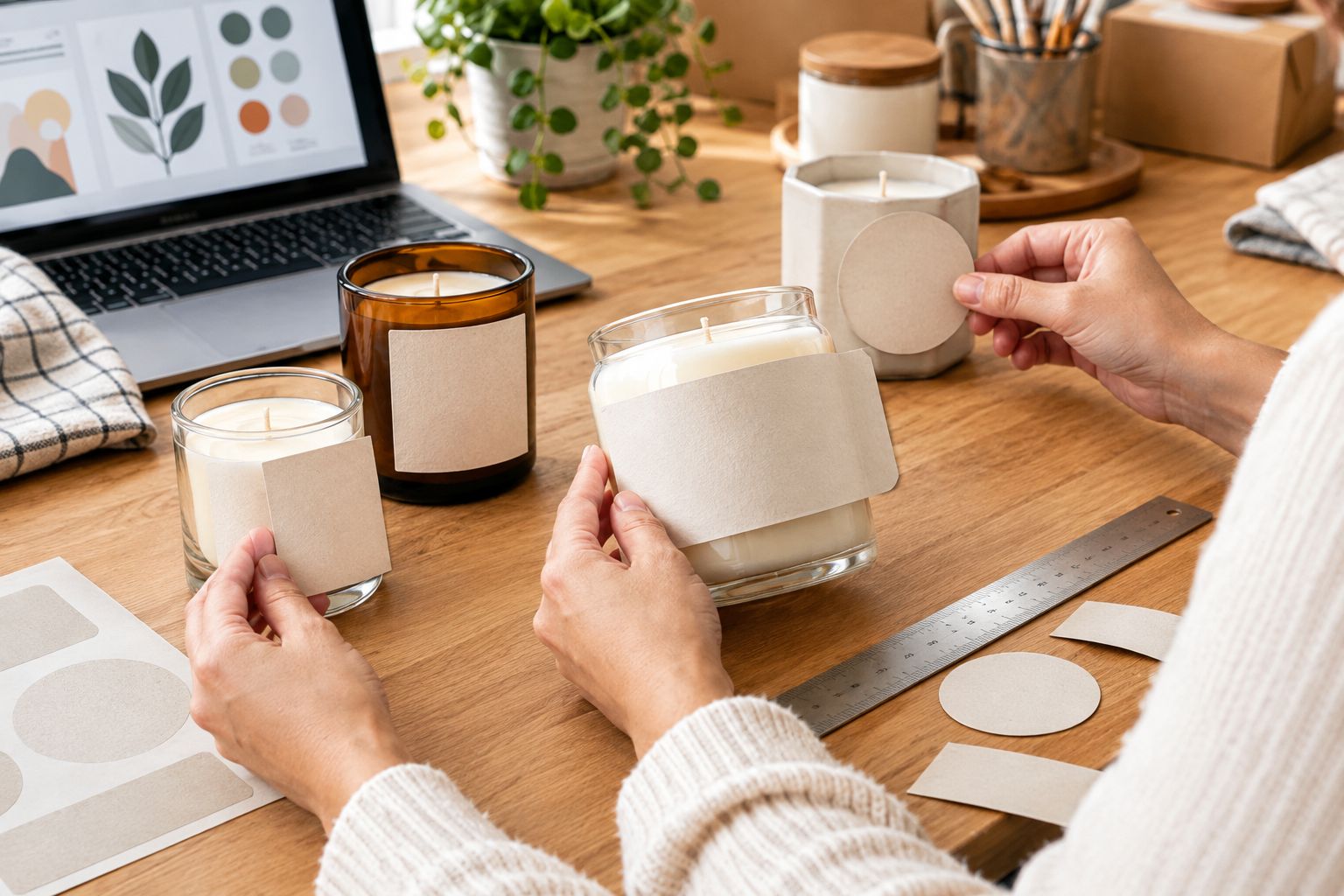
Use a ruler and a paper cutout before opening a design file. Measure the area where the complete sticker can sit without crossing a ridge, seam, pronounced curve, or closure. The container’s overall dimensions are not the same as its usable label area.
Make 1 full-size paper mockup per container shape. Hold it in position and view it from the front, side, and normal shelf distance. On a cylindrical jar, check how much text disappears around the sides.
Do not judge fit from a flat artwork preview alone. A wide label can look balanced on screen while hiding the scent name on the jar. A smaller label with simpler information often solves that layout problem without changing the container.
- Measure the flat or consistently curved application area.
- Cut paper to the proposed finished shape.
- Check that the scent name stays visible from the front.
- Keep the design clear of lids and opening points.
- Repeat the fit check for every vessel shape.
Match the shape and finish to the job
Choose a shape after checking the available space. Circle stickers suit circular artwork and lid placements. Square stickers give you a regular layout for a logo and scent name. Die-cut stickers follow the outline of your artwork, which suits a distinctive logo or a separate giveaway design.
Vinyl Status offers custom die-cut, holographic, circle, square, and QR-code stickers from your artwork. Use free online proofs and human artwork checks to review the design before approval. Those checks help with the print order; you still need to establish whether the selected sticker suits your candle’s application conditions.
For matte versus glossy, review the finish offered for the format you select. Think about glare and readability rather than treating finish as a decorative afterthought. With holographic artwork, preserve a clear area for any information buyers must read.
- Choose circle, square, or die-cut around the placement.
- Keep detailed information separate from decorative effects.
- Confirm the finish offered for the selected format.
- Ask about suitability for your intended surface and conditions.
Prepare artwork that survives a small label
Build the layout around the information a buyer needs first. For a front candle label, that usually means a clear business identity and an easily distinguished scent or product name. Add other necessary information without forcing every brand detail into the same small space.
Print the design on ordinary paper at its intended size. If you cannot comfortably read a line there, do not expect the proof preview’s zoom function to solve it. Remove secondary copy, increase the text size, or move information to another appropriate label.
Keep a separate editable version for each scent. Shared layout elements reduce accidental differences, but copying files also creates opportunities to leave the previous product name in place. Review the exported artwork, not just the working file.
- Set the artwork to the intended finished dimensions.
- Keep important text away from the proposed cut edge.
- Check spelling, scent names, and product variants.
- Review fine lines and small lettering at actual size.
- Supply artwork using the selected product’s file instructions.
Approve the proof and test the application
Treat proof approval as a production decision, not a quick confirmation that the logo looks familiar. Check the selected shape, dimensions, artwork version, and every line of copy. Compare the proof with your physical mockup so the flat preview stays connected to the actual container.
Vinyl Status lists 2-business-day production after proof approval; shipping time is additional. Build your launch schedule around that sequence. Do not count production from the moment you first upload artwork, and do not treat production time as delivery time.
For your 2026 launch checklist, keep artwork approval and application testing as separate tasks. A digital proof cannot establish how a label behaves on your particular vessel during storage, handling, or candle use. Confirm suitability before treating decorative vinyl as an in-use candle label.
- Recheck dimensions, cut shape, and the exact artwork version.
- Confirm text and product details before approving.
- Follow application instructions for the selected sticker.
- Test adhesion on the actual clean, dry container.
- Confirm application suitability separately from print appearance.
Calculate quantities from the whole packaging workflow
Use a spreadsheet or a paper tally to connect labels to products. Count the candles you expect to package, then identify which designs belong to which scent or batch. Keep giveaway quantities separate so promotional plans do not quietly consume production labels.
Packaging decisions also change the job of the sticker. A front-facing box label needs to remain visible when cartons are stacked, while a lid sticker needs to stay clear of the opening. Planning candle packaging for small brands therefore includes deciding what the sticker identifies, where it sits, and whether it interferes with unpacking.
For a 2026 seasonal release, avoid placing time-sensitive artwork on every surface without a reason. A reusable brand sticker paired with a scent-specific label keeps those decisions separate. The limitation is extra application work, so check the complete packing routine before choosing that approach.
- Count saleable products by scent and container type.
- Separate vessel labels, box stickers, and giveaways.
- Include a deliberate allowance for application mistakes.
- Keep seasonal artwork separate from reusable branding where practical.
- Reconcile each design’s quantity before submitting the order.
Compare sticker formats for candle businesses
For your 2026 ordering plan, compare formats by placement and information needs. None of these shapes establishes heat resistance, adhesive suitability, or compliance for a candle application. Confirm those requirements separately.
| Option | Best for | Practical advantage | Key limitation |
|---|---|---|---|
| Circle stickers | Circular logos and lid artwork | Matches a round composition without unused corners | Long scent names need careful layout |
| Square stickers | Compact front labels and box branding | Gives text and artwork a regular layout | Corners and overall width still need a physical fit check |
| Die-cut stickers | Logo-shaped giveaways and distinctive brand artwork | Follows the artwork outline | An irregular outline leaves less predictable space for product details |
| Holographic stickers | Decorative accents and promotional designs | Makes the material effect part of the artwork | Important text needs a layout that remains readable against the effect |
| QR-code stickers | Connecting packaging to a chosen web page | Gives the buyer a scannable destination | Requires a working destination and a real scan test at the intended size |
Choose the simplest format that carries the required information clearly. A decorative shape earns its place when it supports the artwork, not when it forces the scent name into tiny lettering.
QR-code stickers are a separate buying decision. Decide what the scan should accomplish before adding a code to the candle: product information, care guidance, or another specific destination. Keep essential safety information on the appropriate physical labeling rather than making access depend on a phone.
Common mistakes candle makers make
Ordering before finalizing the vessel
A label designed for one jar does not automatically fit its replacement. Finalize the container first, then measure and mock up the sticker. If you use several vessels, treat each as a separate fit check.
Treating every packaging surface as label space
A sticker across a closure can complicate opening, while a label over a seam can sit poorly. Check the entire unpacking sequence. Leave functional areas clear unless the sticker’s intended job specifically requires that placement.
Putting changing details into reusable artwork
A seasonal date or scent name turns a general brand sticker into a product-specific item. Keep those details only where they serve the buyer. Order reusable branding and batch-specific labels according to their different uses.
Confusing artwork approval with application approval
A correct proof confirms the artwork you approve for printing. It does not confirm suitability for heat exposure, every container coating, or every handling condition. Ask the application question directly rather than assuming vinyl answers it.
Ignoring the time spent applying labels
Consider peeling, positioning, and correcting mistakes when you compare formats. Vinyl Status printed stickers use split-back liners for easier peeling, but that does not remove the need for a consistent placement method. Test your packing routine before committing to a complicated multi-label design.
FAQ
What are the best custom stickers for candles?
The right custom stickers for candles fit the vessel, keep product information readable, and suit the intended application conditions. Choose the shape after measuring the container, and confirm adhesive and heat-related suitability rather than assuming every vinyl sticker works on a candle vessel.
What size should my candle labels be?
Your candle label size should follow the usable application area on the actual container. Make a full-size paper mockup and check that the main product information remains visible without turning the jar.
Can I use the same sticker on a candle jar and its box?
Use the same sticker only when its dimensions, artwork, and application requirements work in both locations. A shared logo does not guarantee a shared label size, especially when the jar is curved and the box is flat.
Should I choose matte, glossy, or holographic candle stickers?
Choose the finish around readability and the role of the artwork. Review the finishes offered for your selected format, and keep important text clear of distracting reflections or decorative effects.
Does a decorative candle sticker replace a warning label?
No, a decorative candle sticker does not replace appropriate safety labeling. Establish the requirements for your product and selling market separately, and keep essential information physically accessible.
When does custom sticker production begin?
Vinyl Status specifies two-business-day production after proof approval, with shipping time additional. Allow time for artwork review and any corrections before approval when planning a launch.
How many stickers should I order for a small candle batch?
Base the order on products to package, stickers used per product, planned giveaways, and a deliberate allowance for application mistakes. Count each scent-specific design separately so the total quantity matches the actual product mix.
One last thing
Keep an approved label attached to an empty example vessel as your packing reference. A loose proof shows the artwork; a labeled container shows placement, orientation, and how the finished product should look.
For every 2026 reorder, compare the new artwork and container against that reference before approval. Reusing a familiar file is not the same as checking that the product details are still correct.