

How long do vinyl stickers last outdoors?
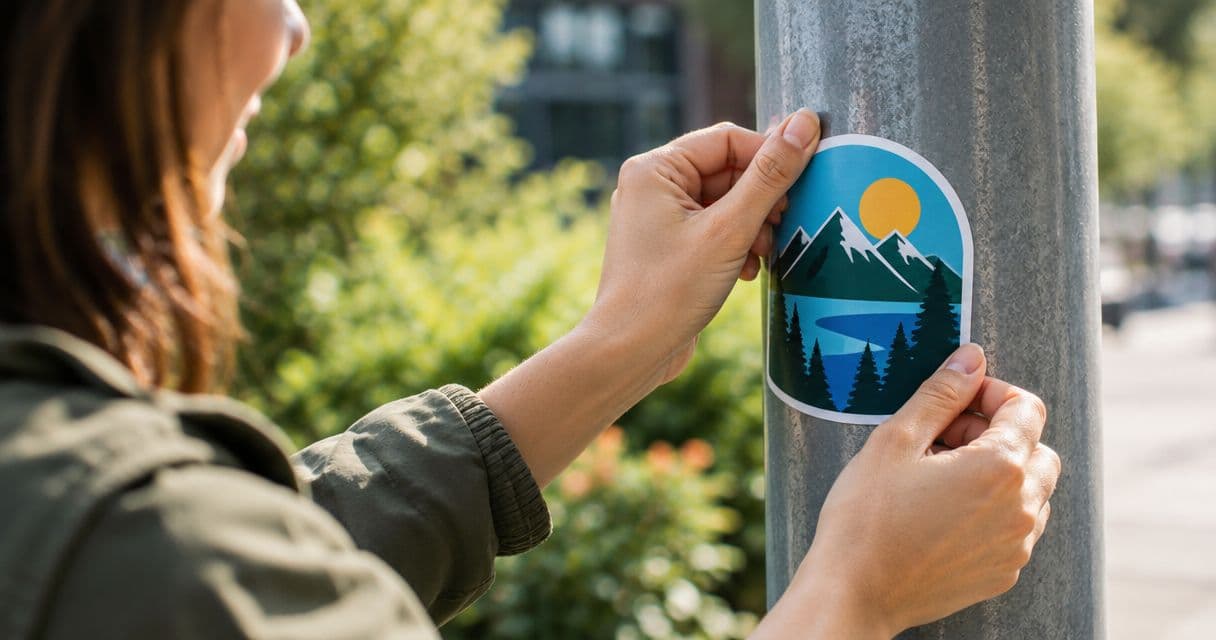
Outdoor vinyl stickers last as long as their specific material, printed finish, and installation conditions allow; there is no single lifespan that applies to every vinyl sticker. A durability claim for unprinted vinyl does not automatically cover the printed ink, adhesive, or finished sticker, so check what the rating includes before placing a bulk order.
- How long do vinyl stickers last outdoors? Use the finished sticker’s documented rating, not a generic vinyl lifespan.
- Sun exposure, surface preparation, abrasion, and exposed edges affect outdoor sticker durability.
- Vinylstatus offers custom vinyl stickers from your artwork; confirm suitability for your outdoor placement before ordering.
- Test the finished sticker on the intended surface before committing to a bulk quantity.
Why this matters
An outdoor sticker can fail in different ways. The print can fade while the adhesive still holds, or an edge can lift while the logo remains readable. Decide which failure would make the sticker unusable for your business.
Vinylstatus fits small businesses ordering custom vinyl stickers from their own artwork. Start with the intended use when considering Vinylstatus, rather than assuming every sticker format has the same outdoor suitability. A logo on a sheltered shop window faces different conditions from a giveaway sticker applied to outdoor equipment.
For a 2026 order, request the current specification for the exact sticker construction. Keep that information with the approved artwork so a later reorder does not depend on an old assumption.
How long do vinyl stickers last outdoors?
Use the documented outdoor durability of the finished printed sticker as your starting point. Then check whether that rating covers the placement, exposure, and surface you intend to use. A material description alone is not enough to establish a replacement schedule.
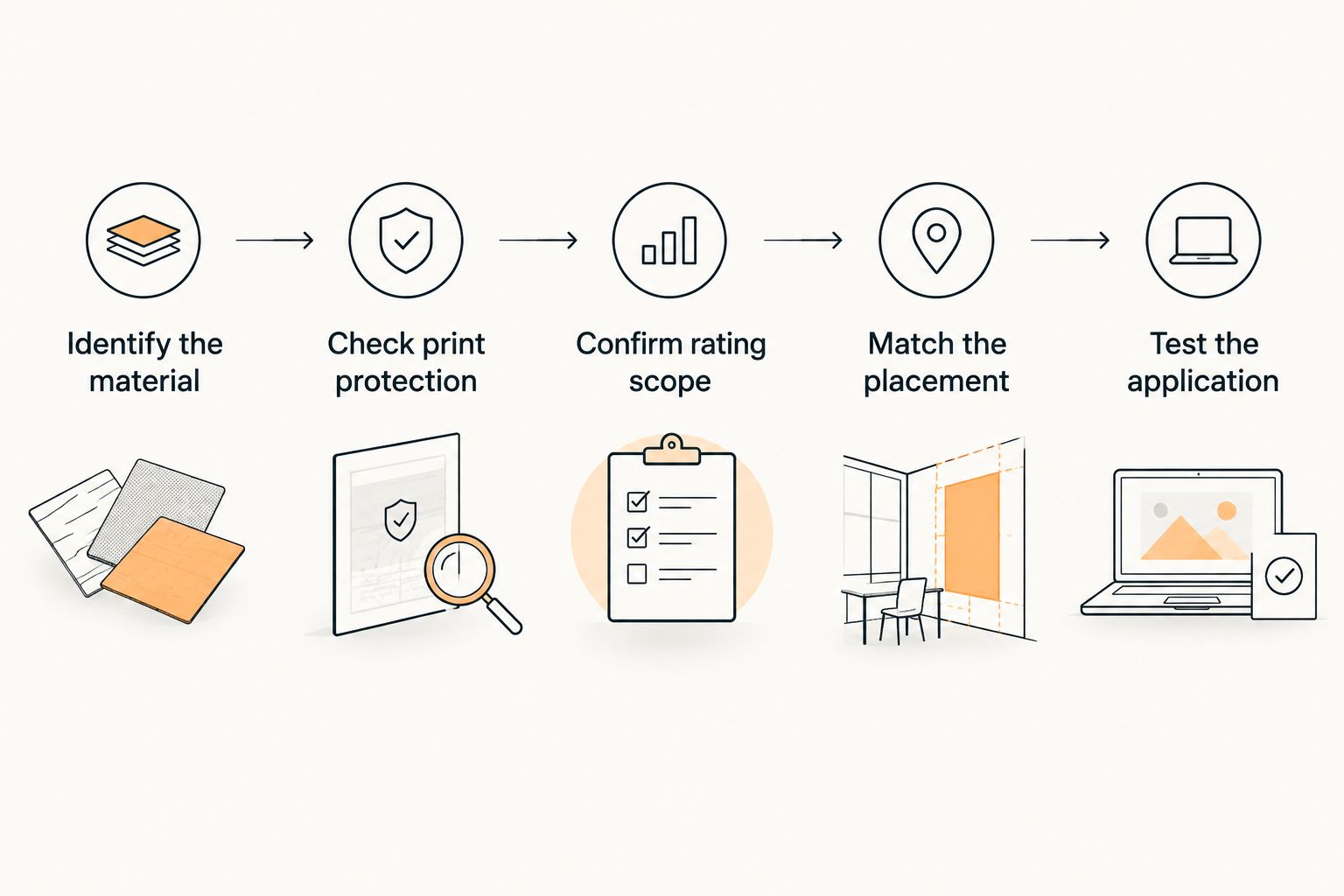
Follow this sequence before ordering:
- Identify the material. Confirm the sticker uses material intended for outdoor use, rather than treating the word vinyl as a complete specification.
- Check print protection. Ask whether the printed surface has a protective layer and what that layer is designed to resist.
- Confirm rating scope. Establish whether the stated durability applies to the base film, printed graphics, adhesive, or complete construction.
- Match the placement. Describe the surface, orientation, sun exposure, cleaning routine, and contact with hands or equipment.
- Test the application. Apply a finished sample to the intended surface and inspect the print, edges, and adhesion under actual use.
Keep the supplier’s wording intact. Do not turn a statement about outdoor suitability into a promise about guaranteed color retention or permanent adhesion.
A sample helps you check fit, adhesion, and handling. It does not establish a multi-year lifespan by itself. Use it alongside the documented specification, not as a replacement for it.
Match outdoor durability to the placement
Outdoor exposure is not one condition. Compare the intended locations before choosing a sticker or deciding how often to inspect it.
| Placement | Best for | Practical advantage | Limitation to check |
|---|---|---|---|
| Sheltered, upright surface | Logos beneath an overhang | Shelter reduces direct exposure to rain | Sunlight and surface contamination still matter |
| Exposed, upright surface | Exterior signs and equipment labels | Keeps the message visible on an outward-facing surface | Direct sun, weather, and cleaning affect the finished sticker |
| Upward-facing surface | Labels that must be read from above | Makes the label visible from the working position | Water, debris, and sunlight reach the face directly |
| Frequently handled surface | Equipment identification | Places the information where people use it | Rubbing and cleaning can wear the print or catch an edge |
Choose for the actual placement, not the most favorable example in a product description. If your giveaway recipients choose their own surfaces, you do not control installation quality or exposure. Avoid promising a fixed outdoor lifespan on that basis.
For packaging, separate outdoor transit from long-term outdoor display. A sticker used on a shipping box has a different job from a permanent-looking logo on an exterior fixture. Describe that job clearly when requesting guidance.
Why outdoor vinyl sticker lifespan varies
The useful life of an outdoor sticker depends on the complete application. These factors explain why identical artwork does not guarantee identical results:
- Sun exposure: Ultraviolet exposure contributes to changes in printed color and polymer materials. A shaded application does not represent an exposed one.
- Print protection: A protective layer adds a barrier over the print. Its presence does not establish an unlimited resistance to sunlight, chemicals, or abrasion.
- Surface condition: Dirt, grease, moisture, loose paint, and unsuitable textures interfere with adhesive contact. Clean-looking is not always application-ready.
- Shape and placement: Edges that cross seams, wrap around tight curves, or sit where hands catch them face different stresses from a flat, uninterrupted application.
- Cleaning and abrasion: Repeated rubbing, abrasive tools, and incompatible cleaners can damage the face or disturb an edge.
- Application conditions: Follow the specified surface preparation and application instructions. Do not invent a temperature range or assume immediate full adhesion.
Ask which of these conditions the supplier’s rating accounts for. For your 2026 purchasing notes, record the intended location beside the material specification; otherwise, the rating loses the context that makes it useful.
Separate fading, peeling, and surface wear
A sticker does not need to fall off to stop doing its job. Inspect the failure that matters to the message, not only whether the adhesive still holds.
Fading: check whether the message remains readable
Color change matters most when it reduces contrast or obscures information. A decorative logo and a small instruction label have different readability requirements. Review fine lettering and background contrast at the actual printed size before approving artwork.
Do not treat readable as unchanged. If consistent brand color is essential to the application, discuss that requirement before ordering rather than judging durability only by adhesion.
Peeling: inspect the perimeter
An edge that lifts gives dirt and moisture a route beneath the sticker. Inspect corners, narrow extensions, and areas near seams or frequent contact. Do not repeatedly press a contaminated edge back down and treat it as a dependable repair.
A detailed die-cut outline can suit a logo, but the outline still needs to work on the intended surface. Simplify delicate extensions when they serve no useful purpose in the printed design.
Surface wear: inspect more than the logo
Scratches and rubbing can affect small text before they make a large graphic look unusable. Inspect the information that a customer or employee must actually read.
Replace a sticker when its required message fails, even if most of the graphic remains attached. This gives your business a useful inspection rule without inventing a universal lifespan.
Build an outdoor sticker order around the job
Start with the application, then choose the artwork and quantity. This keeps a bulk order tied to a business use rather than a general claim about weather resistance.
Define the surface and exposure
Name the substrate as precisely as possible: painted metal, glass, or a particular plastic, for example. Include whether it is smooth, textured, curved, or coated. Follow the surface manufacturer’s restrictions as well as the sticker application instructions.
Describe where the sticker will sit. A label beside a handle receives different contact from one on an untouched panel, even when both are outdoors.
Size the artwork for the viewing distance
Print the design at its intended size and place it on the object before ordering. Check whether the logo, text, and outline fit without crossing a seam or wrapping awkwardly around a curve.
A larger design is not automatically a better fit. The usable flat area and the required reading distance should decide the size. Remove small details that do not survive the reduction.
Check the proof and the physical application separately
A digital proof helps you check artwork layout, spelling, size, and cut shape. It cannot show how an adhesive will behave on your particular surface or reproduce the conditions at your outdoor location.
Ask what artwork checks accompany the order and whether a physical sample is available. Approve the design only after checking the details you can verify on the proof; evaluate surface suitability separately.
Order from actual demand
Base the quantity on planned placements, giveaways, and a justified replacement allowance. Do not buy a large surplus solely because you expect every sticker to last for the same period.
For a 2026 campaign, separate the campaign’s end date from the sticker’s potential material life. A label with an expired offer needs replacement even when its print and adhesive remain intact.
Does waterproof mean a vinyl sticker will last outdoors?
Water resistance alone does not establish outdoor lifespan. Sunlight, abrasion, adhesive compatibility, and the condition of the mounting surface remain separate concerns. Ask what a waterproof claim covers and whether it applies to the complete printed sticker.
Do not extend a claim about rain exposure to immersion, aggressive washing, or every cleaning chemical. Use the product’s stated limits and application instructions.
Will a protective layer stop vinyl stickers from fading?
A protective layer does not establish a fade-proof lifespan. It adds protection over the print, but the finished construction and exposure conditions still determine the applicable durability claim.
Ask about the protective layer when comparing sticker specifications. Matte and glossy describe appearance; neither word alone tells you how long the finished print will remain suitable outdoors.
Can I make outdoor vinyl stickers last longer?
Correct placement, surface preparation, and care support the intended service life. Follow the product instructions, avoid unsuitable surfaces, and keep edges away from predictable rubbing or lifting.
Do not add an unapproved coating or cleaner in an attempt to improve durability. Check compatibility first, and replace a damaged sticker instead of relying on an improvised repair.
FAQ
How long do vinyl stickers last outdoors in direct sunlight?
Direct sunlight does not have a universal sticker lifespan. Use the finished sticker’s outdoor rating and confirm whether its stated conditions match your exposed location.
Are all vinyl stickers suitable for outdoor use?
No, the word vinyl does not establish outdoor suitability. Check the material, printed finish, adhesive requirements, and intended application before ordering.
Will outdoor vinyl stickers stay on plastic?
Adhesion depends on the particular plastic, its finish, and the adhesive. Identify the surface and test the finished sticker rather than assuming all plastics behave alike.
Is matte or glossy better for outdoor sticker durability?
Matte or glossy appearance alone does not establish outdoor durability. Compare the complete sticker construction and documented use conditions, then choose the appearance that suits the artwork.
Can I pressure-wash a surface with vinyl stickers on it?
Do not assume a sticker’s outdoor rating permits pressure washing. Follow its care instructions and avoid directing aggressive cleaning at the edges.
When should I replace outdoor business stickers?
Replace outdoor business stickers when the required message becomes unreadable, the information expires, or the sticker develops damage that compromises its use. Check small text and lifting edges, not just the main logo.
What should I ask before a 2026 bulk sticker order?
For a 2026 bulk sticker order, ask about the finished sticker’s outdoor rating, print protection, surface compatibility, and application instructions. Keep the answers with the artwork approval and test the intended placement before committing to quantity.
One last thing
Your artwork can become obsolete before the sticker wears out. Check dates, offer wording, contact details, and destinations before approving the print. A durable sticker carrying outdated information is still a replacement expense.
For your next Vinylstatus custom vinyl sticker order, write a short application brief before choosing the quantity: surface, exposure, intended message, and acceptable replacement trigger. Buy for a defined use, not an unsupported promise of years outdoors.
Related guides