

Is it legal to put a decal or banner on your windshield?
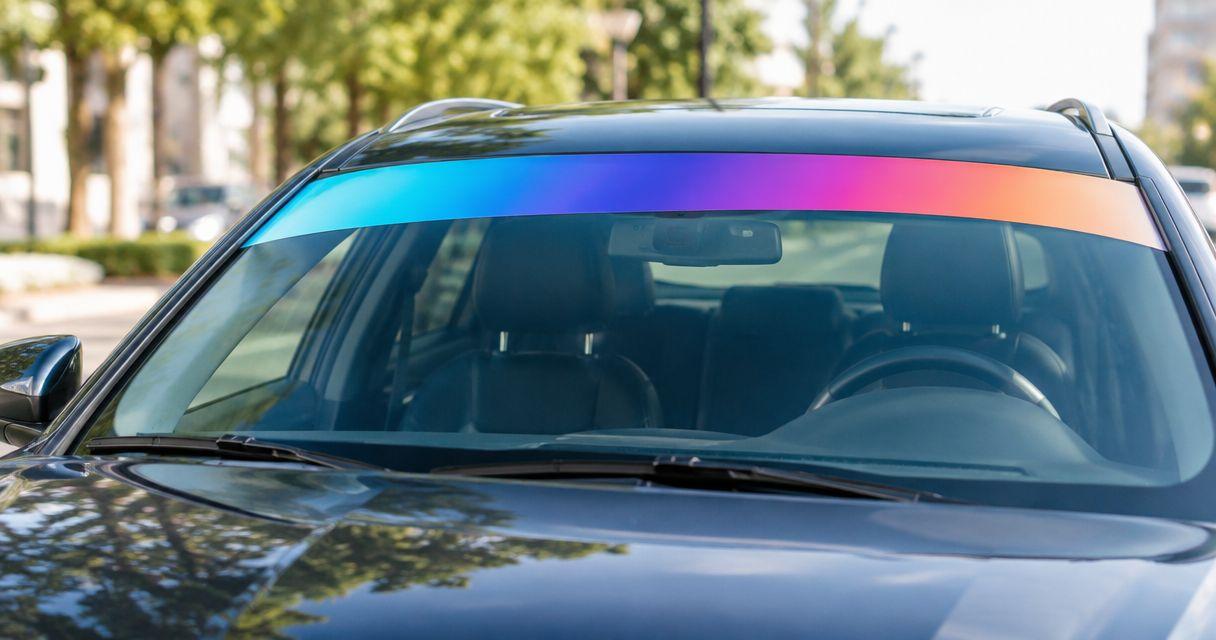
A decal or banner on your windshield is legal only when the applicable law allows its placement, dimensions and effect on visibility. State rules differ, and permission for an inspection sticker or tinted sun strip does not automatically cover a decorative banner. Before ordering in 2026, check the rule for your vehicle and the exact area you want to cover.
- Is it legal to put a decal on your windshield? Placement and state law determine the answer, not the artwork.
- California Vehicle Code section 26708 restricts windshield materials and defines specific exceptions; it is not blanket banner permission.
- Vinylstatus prints custom stickers; artwork approval does not establish that a windshield placement is legal.
- Check windshield banner dimensions and driver visibility before approving custom decal artwork or ordering a business batch.
Is it legal to put a decal on your windshield?
There is no nationwide yes-or-no answer for an ordinary passenger vehicle. Start with your state's windshield-obstruction law, then check its exceptions. A commercial vehicle can also face separate federal requirements.
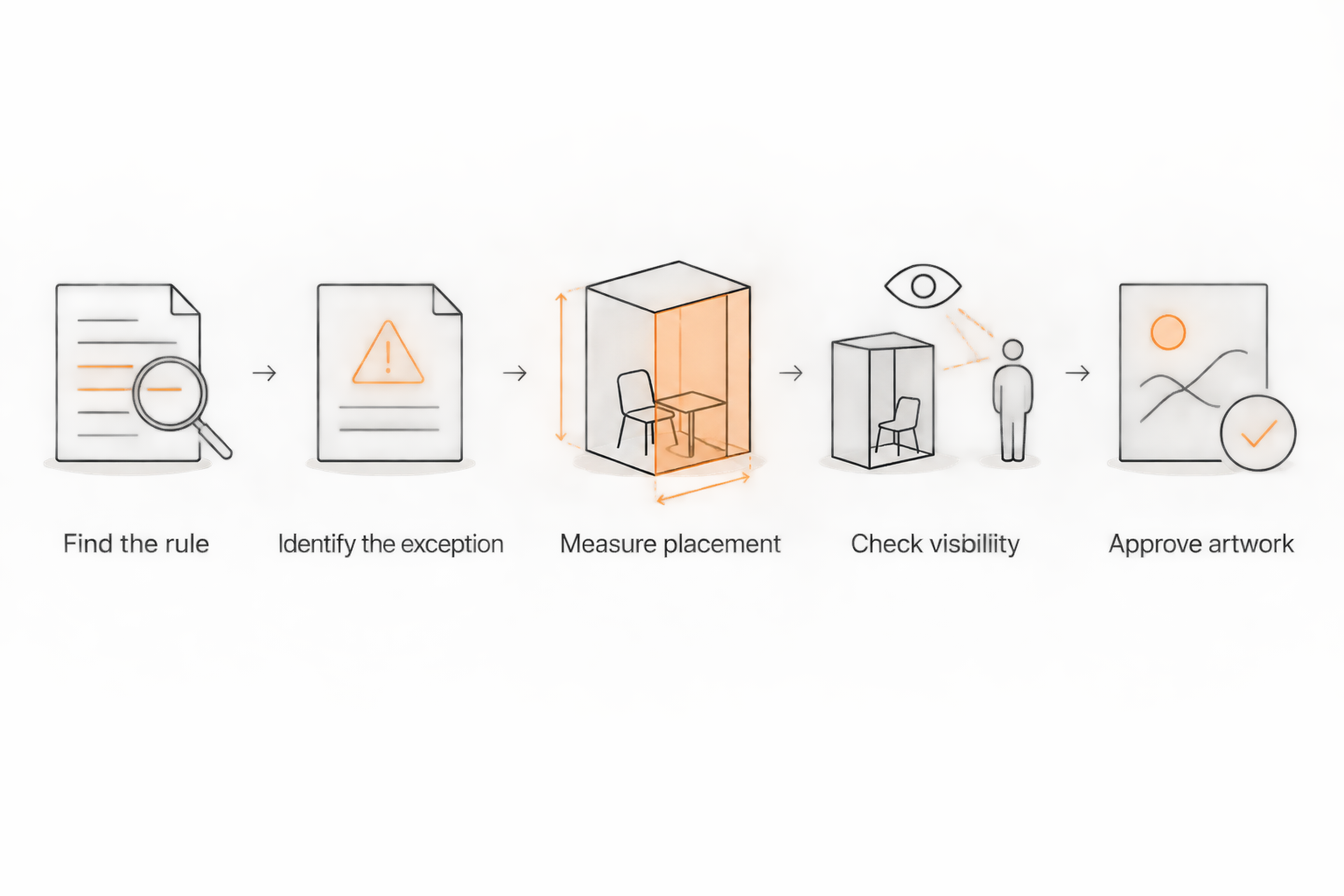
Use this sequence before you approve artwork:
- Find the rule. Read the current state vehicle code covering windshield obstructions, signs and stickers.
- Identify the exception. Determine whether the law allows your particular decal, rather than assuming every small sticker qualifies.
- Measure placement. Mark the proposed outline on a full-size paper template and compare it with the permitted area.
- Check visibility. Sit in the normal driving position and inspect the view through the glass.
- Approve artwork. Confirm size, orientation and placement before committing to a batch.
Vinylstatus offers custom stickers and decals from customer artwork. That printing service and your legal placement decision are separate: a printable design is not necessarily a permitted windshield design.
Why this matters
For a small business, the mistake is not just an incorrectly placed sticker. It is ordering a batch around a windshield position you cannot use, then redesigning the artwork or changing the entire placement plan.
Treat legal placement as an ordering requirement in 2026, alongside dimensions and artwork. Choose the usable surface first; fit the design to that surface second. A logo that works on packaging does not automatically work across a driver's field of view.
Small windshield decals: check the specific exception
A small decal is not automatically legal. Some laws allow materials only in defined locations, while others distinguish official permits from decorative or advertising stickers.
California provides a useful example. California Vehicle Code section 26708 generally restricts materials on vehicle glazing that obstruct or reduce the driver's clear view, then lists exceptions. Those include signs, stickers or other materials within a 7-inch square in the lower windshield corner farthest from the driver and a 5-inch square in the lower corner nearest the driver.
The shape of those areas matters. A 7-inch square contains 49 square inches, but an equally sized, long horizontal strip is not the same permitted footprint. Do not convert an area allowance into permission to use a different shape or location.
These California examples do not establish the rule for another state. Read the complete applicable provision, including conditions and separate requirements, before choosing a location.
Full-width windshield banners: do not assume permission
A banner creates a different placement problem from a small corner decal. Its width spreads the design across the glass, and its lower edge can extend into the driver's view.
A tint allowance is not automatic permission for an opaque advertising banner. Laws can distinguish transparent sunscreening materials, lettering, stickers and other obstructions. Matching the depth of an allowed tinted strip does not settle whether the banner itself is allowed.
The AS-1 marking found on some windshields is not a universal sticker permission line. Do not use it as the sole instruction for sizing a business banner. Check the provision that applies to the material you intend to install.
Avoid approving a fleet-wide banner from a photograph of another vehicle. Different windshield shapes, seating positions and applicable rules make that an unreliable ordering reference.
Which placement should you consider before ordering?
The table compares placement choices, not universal legal permissions. Best for identifies the ordering task each option addresses; it does not certify legality or material suitability.
| Placement option | Best for | Practical advantage | Limitation to resolve |
|---|---|---|---|
| Small windshield corner decal | A layout that fits an expressly permitted corner area | Keeps the artwork within a compact footprint | The exception must cover the decal and its exact position |
| Upper windshield banner | Evaluating a proposed wide wordmark | Provides a horizontal artwork layout | Tint rules alone do not establish permission for an opaque banner |
| Non-glass body panel | Keeping advertising off the windshield | Avoids placing the design in the forward glass view | Check surface compatibility and avoid lights, plates and required markings |
| Removable display used only while parked | Stationary promotions and event displays | Separates the display from driving use | Remove it before driving; parking and advertising restrictions still apply |
For business branding, evaluate a non-glass location before committing to windshield artwork. That recommendation does not mean every body panel is suitable. Confirm the surface, application method and removal requirements for the specific decal.
A parked-only display needs a removal routine. Calling a banner temporary does not make it acceptable to drive with an obstructed windshield.
Why windshield decal legality varies
The controlling details are more useful than a generic maximum sticker size. Check these factors together:
- Jurisdiction. State windshield-obstruction and glazing rules differ. A rule quoted for another state does not answer your placement question.
- Vehicle classification. Commercial motor vehicles can face federal glazing and visibility requirements in addition to applicable state rules.
- Purpose. An inspection certificate, toll device, required permit and decorative logo do not necessarily share the same exception.
- Location and dimensions. A permitted corner area is not interchangeable with a top strip or central windshield position.
- Material and visibility. Opaque vinyl, cut lettering and transparent materials affect the view differently, but the applicable law still controls.
- Driving or stationary use. A display intended for a parked vehicle needs separate consideration from a decal left in place while driving.
For vehicles subject to federal motor-carrier safety rules, consult Federal Motor Carrier Safety Administration requirements, including 49 CFR section 393.60 on glazing and windshield visibility. Do not apply a passenger-car sticker example to a commercial vehicle without checking its classification.
How should you size artwork before ordering?
Start with a measured placement, not the longest version of your logo. Record the maximum permitted footprint, the intended position and whether the decal will be applied inside or outside the glass.
Then make a full-size paper template. Check its position from the driver's seat while the vehicle is parked, including the view toward intersections, pedestrians and traffic signals. This practical visibility check supplements the legal check; it does not replace it.
For a business order, keep the following details with the artwork:
- Finished dimensions: specify the complete cut outline, not just the printed lettering.
- Artwork orientation: identify which direction the design must face after installation.
- Application side: distinguish inside-glass placement from outside-glass placement.
- Vehicle assignment: identify which measured vehicle or placement the design fits.
- Approval responsibility: name the person who confirms the placement before the artwork proceeds.
Do not assume an ordinary printed sticker works as an inside-glass, outward-facing decal. Adhesive position and print construction must match that use. Ask about suitability before approving the design rather than trying to reverse it during installation.
Use the artwork-to-approval ordering guide to organize the printing steps after you have settled placement. Keep your legal-placement notes separate from the artwork approval so neither decision gets mistaken for the other.
What should a business check before a bulk order?
Vinylstatus suits small businesses ordering custom stickers from their own artwork; windshield placement still requires a separate legal check. Confirm that the proposed decal construction supports your intended use before treating a general sticker format as a vehicle-glass product.
For your 2026 order, count the vehicles or recipients that have a confirmed use for the design. Do not make the batch depend on an unverified windshield location. If you plan to distribute decals as giveaways, avoid telling recipients that one placement is legal everywhere.
Keep installation instructions specific to the approved use. If the order covers different vehicles, do not assume the same dimensions and position fit all of them. A separate layout is preferable to stretching or trimming a design into an unsuitable space.
The benefit of settling these details early is straightforward: you approve artwork that fits an identified use. The trade-off is that legal placement, surface suitability and print preparation remain separate checks, not a single approval.
Does putting a decal inside the windshield make it legal?
Inside placement does not remove windshield-obstruction requirements. A decal can affect visibility whether it sits on the inner or outer surface. Inside placement also requires print orientation and adhesive construction suited to viewing through glass.
Does see-through lettering make a banner legal?
See-through lettering does not automatically create a legal exception. Cut letters leave uncovered glass between characters, but the remaining material still needs to comply with the applicable rule. Check the actual design and placement, not just the product description.
Does artwork approval confirm legal placement?
Artwork approval does not confirm windshield legality. It addresses the print file and the order being approved. You still need to establish that the decal's dimensions, location and intended vehicle use comply with the applicable requirements.
FAQ
Is it legal to put a decal on your windshield in 2026?
A windshield decal is legal only when it complies with the applicable placement, visibility and vehicle requirements. Check the current state vehicle code and any additional rules for your vehicle before installation.
Can I put a business logo across the top of my windshield?
A business logo across the top of your windshield is not automatically permitted. Check the rule for signs, stickers or other materials rather than relying only on a tint-strip allowance.
How big can a windshield sticker be in California?
California Vehicle Code section 26708 includes exceptions for materials within a 7-inch square in the lower passenger-side corner and a 5-inch square in the lower driver-side corner. Read the complete provision and its conditions before applying those exceptions to your decal.
Is a windshield banner legal if I can still see the road?
Being able to see the road does not by itself establish that a windshield banner is legal. A rule can restrict the material’s location or dimensions even when you consider the remaining view adequate.
Can I use the AS-1 line to size a vinyl banner?
The AS-1 line is not a universal permission line for vinyl banners. Check whether the applicable rule permits your type of material, not just transparent sunscreening material.
Are commercial vehicle windshield decals subject to different rules?
Commercial vehicles can be subject to additional windshield and visibility requirements. Confirm the vehicle’s classification and applicable Federal Motor Carrier Safety Administration rules before using a passenger-car placement example.
Can Vinylstatus approve whether my windshield decal is legal?
Vinylstatus artwork approval should not be treated as legal clearance for windshield placement. Confirm the applicable rule separately, then provide the finished dimensions and intended application when discussing your order.
One last thing
The cheapest design change happens before you order the batch. Keep a full-size paper template with your placement notes and approved artwork. It gives the person ordering and the person installing the same physical reference.
For a 2026 business order, establish a fallback placement before printing. If the windshield location does not satisfy the applicable rule, change the placement or the design instead of treating a smaller obstruction as an automatic solution. This is general ordering guidance, not a legal opinion about a particular vehicle.
Related guides
- Custom die-cut stickers for food trucks and trailers
- Waterproof vs. regular stickers: what matters outside
- Bulk custom stickers for small businesses: an ordering guide