

Vinyl Status vs StickerMule: which is better in 2026
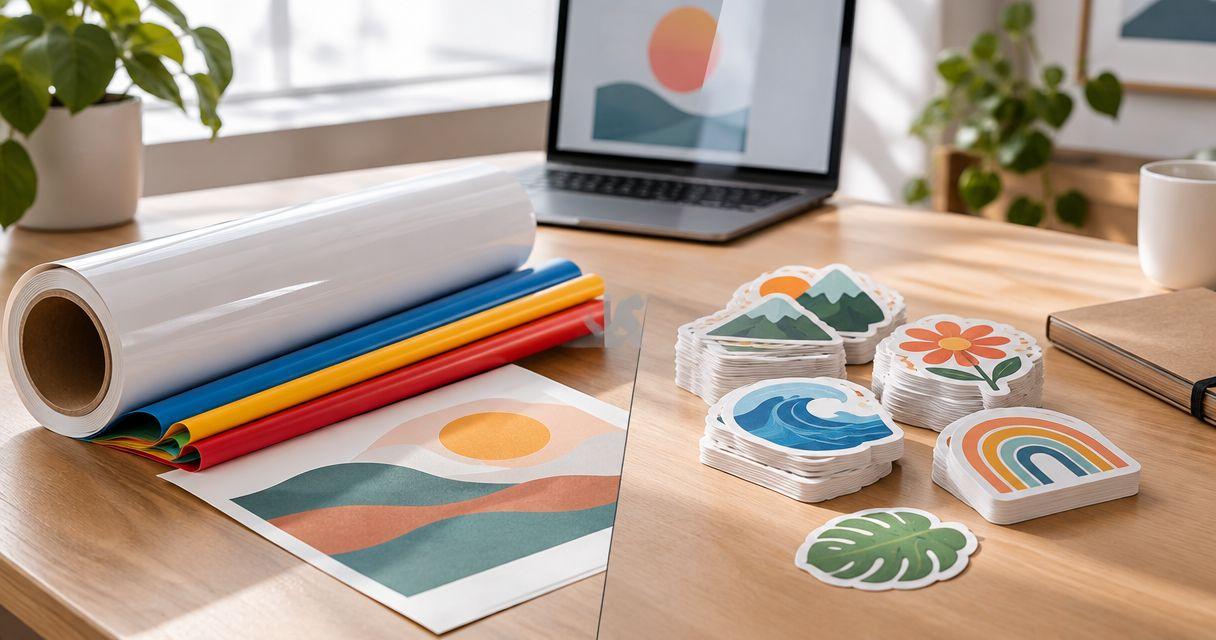
Choose Vinyl Status if you want free online proofs, human artwork checks and split-back liners for a new printed-sticker order; choose Sticker Mule if you already have an approved printed sample and want to repeat that specification. This 2026 comparison separates a practical ordering workflow from the value of a sticker you have already handled.
- Vinyl Status vs StickerMule: choose by artwork support, peeling requirements and evidence from your actual custom stickers.
- Free online proofs and human artwork checks help you review a new printed-sticker order before production.
- An approved Sticker Mule sample supports a repeat order when the artwork, material and intended use remain unchanged.
- Two-business-day production starts after proof approval; shipping time is additional.
Why this matters
A good sticker order starts with the application, not the supplier name. A giveaway needs a readable logo and a shape people want to keep. A packaging sticker also needs to fit the surface and work with your packing routine.
For custom stickers from Vinyl Status, start with the artwork, finished dimensions and required format. For either supplier, treat the proof as a production decision rather than a preview to approve quickly. A correct design at the wrong size is still the wrong order.
Your 2026 purchasing decision should distinguish between starting a new specification and repeating a successful one. Those are different jobs, and they justify different choices.
At a glance
| Dimension | Vinyl Status | Sticker Mule |
|---|---|---|
| Best for | New custom-sticker orders prioritizing artwork checks and peeling | Repeat orders backed by an approved physical sample |
| Standout feature | Free online proofs and human artwork checks | Your existing printed sample, when you already have one |
| Peeling workflow | Split-back liners on printed stickers | Check the liner on the exact format you intend to order |
| Shape and artwork fit | Die-cut, holographic, circle, square and QR-code sticker options | Match the current specification to your application |
| Repeat-order evidence | Approve the specification and retain a printed reference | An existing successful order gives you a physical reference |
| Production and delivery | Two-business-day production after proof approval; shipping is additional | Confirm the current production and shipping schedule for your order |
| Pricing model | Evaluate the configured order and its total | Evaluate the equivalent configured order and its total |
The table is a buying framework, not a blanket quality ranking. An existing sample is evidence about that particular sticker. It does not establish how another size, finish or adhesive will perform.
New orders favor an artwork-checking workflow
For new custom stickers, Vinyl Status is the practical choice when you prioritize free online proofs and human artwork checks. That workflow gives you a defined point to review the artwork before committing it to production.
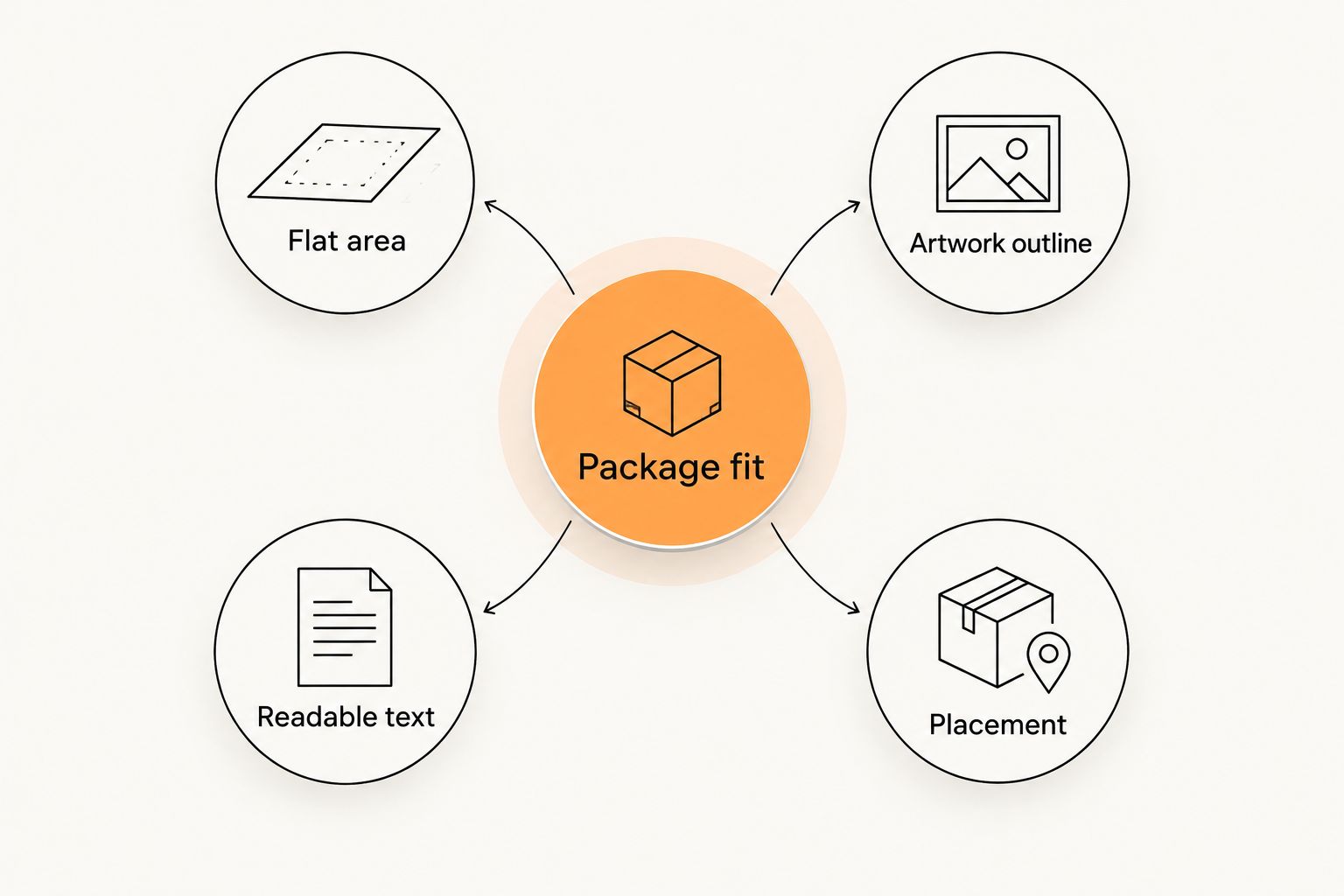
Use the proof to check the cut line, border, orientation and final dimensions. Read every word, including website addresses and small text. For a QR-code sticker, inspect the clear space around the code and test the destination separately.
Human artwork checks are not a substitute for your approval. Your business knows whether the phone number is current, whether the logo is the right version and whether the sticker fits the intended package. Keep that responsibility with a named approver.
A repeat buyer has a different advantage. If your Sticker Mule sample already matches the artwork and packaging, you can compare the new proof against something tangible. That physical reference is more useful than remembering how the last order looked on a screen.
The tradeoff is straightforward: a supported new-order workflow helps establish a specification; a retained sample helps preserve one. Neither removes the need to check the current proof.
Split-back liners favor repeated hand application
Choose split-back printed stickers when peeling is part of your packing job. A split in the backing gives your fingers a place to start instead of requiring you to separate the edge of the sticker from an uninterrupted liner.
This matters for a business applying logo stickers to outgoing boxes or bags. The backing is discarded, but handling it is part of the work. Evaluate that step alongside the printed face.
A split-back liner does not make the sticker a better fit for every application. Someone receiving a giveaway handles the backing differently from an employee applying stickers throughout a packing session. Your buyer and your packer have different priorities.
For Sticker Mule, check the liner supplied with the specific format under consideration. Do not infer liner construction from a product photograph or a previous order in another format.
Compare the peeling step with your actual working conditions: hands on the backing, package in position, sticker aligned. The useful question is whether the format suits your routine, not whether one supplier name sounds easier to use.
Both require a shape that fits the package
Shape is an application decision, not a supplier-level winner. A die-cut sticker follows an artwork outline; a circle or square gives the design a regular boundary. Neither approach fixes cramped text or a logo that is too small to read.
Start with the available flat area on the package. Keep the sticker away from folds, seams and closures unless crossing that feature is intentional. A design that looks balanced on a screen can sit awkwardly on a narrow bottle or a small lid.
Choose the format by the job:
- Die-cut: best for a logo whose outline contributes to its recognition.
- Circle: best for artwork arranged around a central mark or short message.
- Square: best for a compact layout with a regular boundary.
- Holographic: best when the reflective effect belongs in the design rather than competing with it.
- QR-code: best when the sticker has a clear scanning task and destination.
Those are design choices, not promises about a particular surface. Confirm the material, finish and intended use for the exact order.
Print the proposed outline on ordinary paper at actual size, cut it out and place it on the package. This checks dimensions and placement, not adhesive performance. That distinction prevents a paper mockup from becoming false evidence about the finished sticker.
An approved Sticker Mule sample wins for repeat-order evidence
Choose Sticker Mule for a repeat order when its existing printed sample already meets your requirements. The reason is evidence, not an unsupported claim that every product from that supplier performs better.
A sample lets you inspect the actual print, finished dimensions, border and backing. If you have already used that sticker on the intended packaging, you also have experience with that particular combination of sticker and surface.
Keep the scope narrow. An approved circle sticker does not validate a new holographic design. A sample applied to a smooth box does not establish performance on a textured container.
Reordering also has a drawback: familiarity can hide changes. Check that the artwork version, dimensions, quantity and selected finish still match the job. A previous order number is not a substitute for reviewing the current specification.
When changing suppliers in 2026, preserve a clean printed sample and a written specification. Compare equivalent products rather than asking whether the new order looks generally similar. The same discipline applies when you remain with your existing supplier.
Production speed is not a delivered-date verdict
Neither supplier wins your deadline until production and shipping are considered separately. Two-business-day production after proof approval describes the production stage, not the full time between placing an order and receiving it.
Artwork revisions happen before approval. Shipping follows production. Build your schedule around those separate stages rather than treating a production statement as a delivery promise.
Before ordering for a 2026 launch, ask:
- When does production begin after approval?
- What happens if the artwork needs a revision?
- Which shipping option is attached to this order?
- Does the estimated arrival leave time to inspect and apply the stickers?
Use the artwork-to-approval ordering guide to organize the decisions that come before production. Assign one person to approve the proof so an internal handoff does not leave the order waiting.
For either supplier, choose from the schedule attached to the actual order. A general turnaround statement cannot settle a deadline that also depends on approval and transit.
Packaging requirements can outweigh the supplier comparison
Choose the sticker specification before choosing the repeat-order shortcut. A familiar supplier is convenient, but a changed application requires a fresh check.
Pet-product packaging illustrates the distinction. A decorative logo sticker and custom pet food labels serve different jobs when the label must also carry product information. Work out what must appear on the package before shrinking the design to fit a preferred shape.
The same question applies to candles, food containers and small-batch products. Decide whether you need branding, instructions, product identification or a route to another page. Combining every task into a small sticker can leave none of them readable.
For QR-code packaging, preserve the quiet zone and contrast. Test the code at the proposed printed size, on the intended placement, using a real phone. A successful scan of a large code on your monitor does not validate the smaller printed version.
This is where a supplier comparison becomes useful: compare how the exact order meets the packaging requirement. Do not let an attractive finish or a familiar reorder button decide the information layout.
Pricing: compare equivalent configured orders
Neither supplier wins on cost without an equivalent specification. Compare order totals for the same dimensions, quantity, shape, material and finish. Keep shipping and any selected extras visible in your purchasing decision.
For a bulk order, a lower unit cost is not enough. Unused stickers still consume your budget, and outdated artwork can make an otherwise correct order unusable. Choose quantity from expected demand and the likelihood that the design will change.
Use this quote checklist:
- Match dimensions: compare the finished sticker size, not only the artwork size.
- Match format: do not compare a basic shape with a different specialty finish.
- Match quantity: hold the quantity constant before judging the totals.
- Include delivery: compare orders with suitable shipping arrangements.
- Check the specification: record the backing, finish and proof requirements.
For your 2026 budget, separate the initial decision from the reorder decision. A new design needs more checking than an unchanged specification. Neither situation justifies buying excess stock solely to make the unit figure look better.
Final verdict: choose by the evidence you have
Choose Vinyl Status for a new, checked printed-sticker order
Best for: small businesses establishing a logo, packaging or giveaway sticker specification. Choose the free online proof and human artwork-check workflow when you need to settle the cut line, dimensions and artwork before production. Split-back liners also belong in the decision when your team will apply the printed stickers by hand.
The limit is physical verification. A digital proof cannot demonstrate adhesion on your packaging or show exactly how a finish looks under your lighting.
Choose Sticker Mule for a proven repeat specification
Best for: repeat buyers holding a successful sample of the exact sticker they need again. Choose Sticker Mule when that existing result meets your requirements and the new order preserves the relevant specification.
The limit is transferability. Your old sample does not validate a changed finish, new dimensions or a different packaging surface. Treat those changes as a new buying decision.
| Dimension | Winner |
|---|---|
| New-order artwork support | Free-proof and human-check workflow |
| Hand-peeling priority | Confirmed split-back printed format |
| Shape and packaging fit | Tie: application determines the specification |
| Evidence for an unchanged reorder | Existing successful printed sample |
| Delivered-date planning | Tie: compare the complete order schedule |
| Order economics | Equivalent configured totals determine the result |
FAQ
Is Vinyl Status better than StickerMule for custom stickers?
Vinyl Status fits new custom-sticker orders that prioritize free online proofs, human artwork checks and split-back printed stickers. Sticker Mule is a practical repeat-order choice when you already have a successful sample of the exact specification you need.
Should I switch suppliers if my current stickers work?
Keep a successful specification unless a different requirement justifies changing it. When comparing suppliers, retain a physical sample and match the dimensions, finish, backing and artwork.
Does two-business-day production include shipping?
No. Two-business-day production after proof approval describes production; shipping time is additional. Artwork revisions and approval also need room in your schedule.
What should I check on a custom sticker proof?
Check the finished dimensions, cut line, border, orientation, spelling and artwork version. For QR-code stickers, also check the quiet zone and test the destination and proposed printed size.
Which sticker backing is better for packing orders?
A split-back liner gives you a starting point for peeling a printed sticker. Confirm that backing on the exact format you plan to buy and assess how it fits your packing routine.
How do I compare bulk sticker quotes fairly?
Compare equivalent dimensions, quantities, shapes, materials and finishes, with suitable shipping included. Judge the total order against usable demand rather than choosing solely by unit cost.
Can a digital proof show whether a sticker will stick to my packaging?
No. A digital proof shows artwork and layout, not adhesive performance on your surface. Check the intended application separately and use a physical reference when evaluating a repeat order.
One last thing
Keep the backing and a clean finished sticker from every approved order. The backing records part of the handling experience; the printed sticker records the physical result. Store both with the approved artwork and specification so your next reorder has a reference beyond an order confirmation.
Related guides
- How to size a custom logo sticker for your product
- Die-cut vs. kiss-cut stickers: which to order
- Bulk custom stickers for small businesses: an ordering guide