
Best marine decal types for boats and watercraft owners 2026
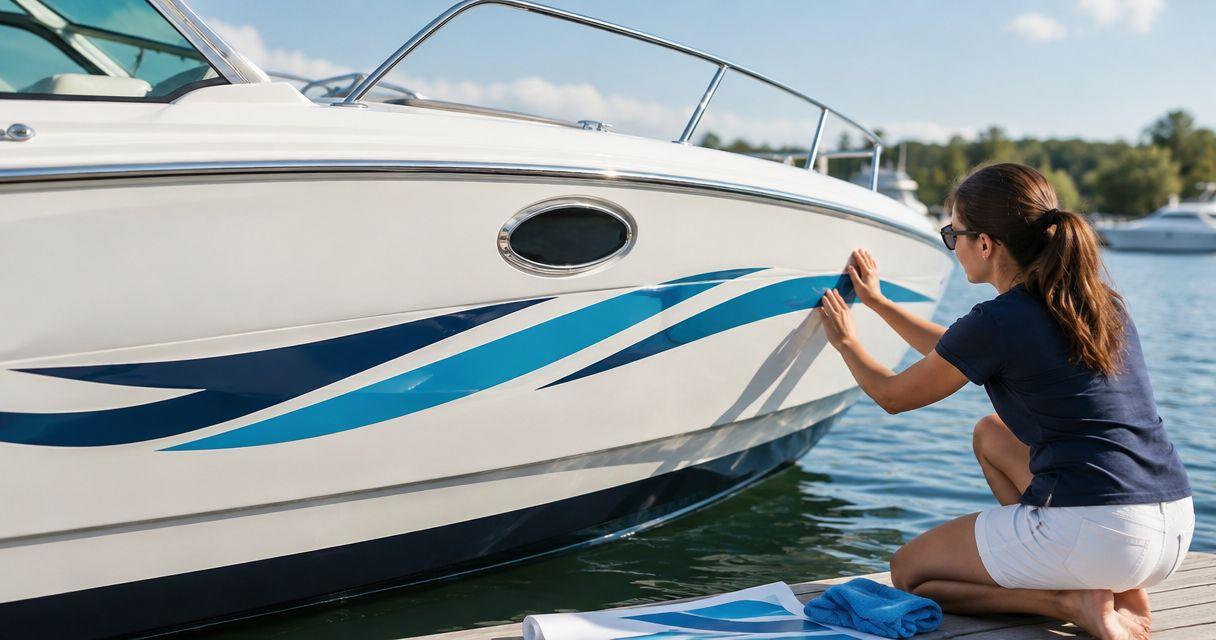
For custom boat decals in 2026, choose cut-vinyl lettering for a boat name, printed die-cut stickers for a shaped business logo, and QR-code stickers for dockside information. Vinylstatus is an option for small businesses ordering custom printed stickers; confirm the selected material’s suitability for the boat’s surface and exposure before ordering.
- Choose custom boat decals by placement and purpose, not appearance alone.
- Cut-vinyl lettering suits boat names; printed die-cut stickers suit shaped business logos.
- QR-code stickers suit stationary, accessible scan locations—not distant or moving boats.
- Vinylstatus offers custom printed stickers; confirm material suitability before choosing an exposed boat placement.
Why this matters
A charter operator’s hull logo, a marina’s equipment label, and a giveaway sticker solve different problems. Treating them as one purchase makes it easy to choose an attractive format that does not fit the job.
Choose the application first, then the decal type. Above-water placement does not eliminate exposure to sunlight, spray, cleaning products, or abrasion. An exterior boat application needs material-specific guidance, not a general assumption that every vinyl sticker belongs on a hull.
What makes the best custom boat decals?
Use these criteria for your 2026 order before comparing shapes or finishes:
- Surface compatibility: Identify the actual surface, such as painted metal, gelcoat, glass, or a removable equipment case. Ask about compatibility with that substrate.
- Exposure suitability: Separate sheltered placements from sun, spray, repeated washing, and continuous immersion. Confirm the intended exposure explicitly.
- Readable artwork: Favor recognizable lettering and simple logos. Inspect the design at its intended physical size.
- Application complexity: Consider whether the design needs transfer material, careful alignment, or placement around fittings and curves.
- Useful quantity: Base the order on named boats, equipment, packaging, or planned handouts—not an undefined future audience.
- Proof accuracy: Check dimensions, spelling, cut lines, contrast, and any destination encoded in a QR code before approval.
A finish cannot compensate for an unsuitable material. Nor does a clean digital proof establish adhesion on a particular coating.
Marine decal types at a glance
These recommendations compare formats by their most useful role. They do not assign an unverified marine durability rating to any product.
| Decal type | Best for | Standout feature | Key limitation |
|---|---|---|---|
| Cut-vinyl lettering | Boat names and simple lettering | Individual shapes without a surrounding printed panel | Separate characters require careful positioning |
| Printed die-cut stickers | Shaped charter and marine-business logos | Custom outline around printed artwork | Fine shapes and small text complicate the design |
| QR-code stickers | Dockside booking and information | Connect a physical location to a web destination | Require close access, contrast, and a real scan test |
| Circle stickers | Repeated equipment and packaging labels | Consistent shape for a repeatable layout | Circular space restricts wide logos and long text |
| Holographic stickers | Marine-business giveaways | Reflective visual effect | Visual effect can compete with detailed artwork |
1. Cut-vinyl lettering: best for boat names
Cut-vinyl lettering uses individually cut characters or shapes rather than a printed rectangular background. It suits a boat name, a short fleet identifier, or a straightforward wordmark when the lettering itself is the design.
Start with viewing distance and available space. Measure the usable area between hardware, edges, and surface changes instead of treating the entire transom as a blank canvas.
Cut-vinyl lettering pros:
- Keeps the design focused on the name or identifier.
- Avoids a surrounding printed panel.
- Supports simple lettering and single-color graphics.
Cut-vinyl lettering cons:
- Separate characters need accurate alignment during application.
- Thin strokes and intricate details complicate handling.
- A boat name is not a substitute for legally required identification.
Ordering advice: Print a full-size paper layout and temporarily position it where the lettering will go. Check the name from the dock, then inspect clearance around fittings. Confirm the selected vinyl, application method, and surface compatibility with the supplier.
For required registration markings, use the responsible authority’s current instructions. Do not copy a decorative lettering layout and assume it meets identification rules.
Best for: Owners and operators who need a readable boat name rather than a full-color illustration.
Verdict: Buy for simple boat lettering after confirming material suitability and any applicable marking rules.
2. Printed die-cut stickers: best for shaped business logos
Printed die-cut stickers combine printed artwork with a cut outline that follows the design. This format fits a charter company’s emblem, a marine service logo, or a promotional illustration that should not sit inside a standard circle or square.
Vinylstatus offers custom die-cut stickers. For a boat placement, confirm the selected material’s surface and exposure requirements before treating the format as a hull graphic.
Printed die-cut sticker pros:
- Accommodates multicolor logos and illustrations.
- Lets the outline become part of the design.
- Gives business artwork a defined, repeatable shape.
Printed die-cut sticker cons:
- Deep notches and narrow projections make the outline more complicated.
- Small text can become unreadable when the design is reduced.
- The cut shape alone says nothing about suitability for marine exposure.
Ordering advice: Simplify the silhouette before adding small decorative details. Check whether the border looks balanced around the entire logo, not just around its widest section.
For a 2026 logo order, compare paper mockups at 3 inches wide and 4 inches wide. These are test sizes, not recommended minimums. Use the version that fits the placement while keeping the business name readable.
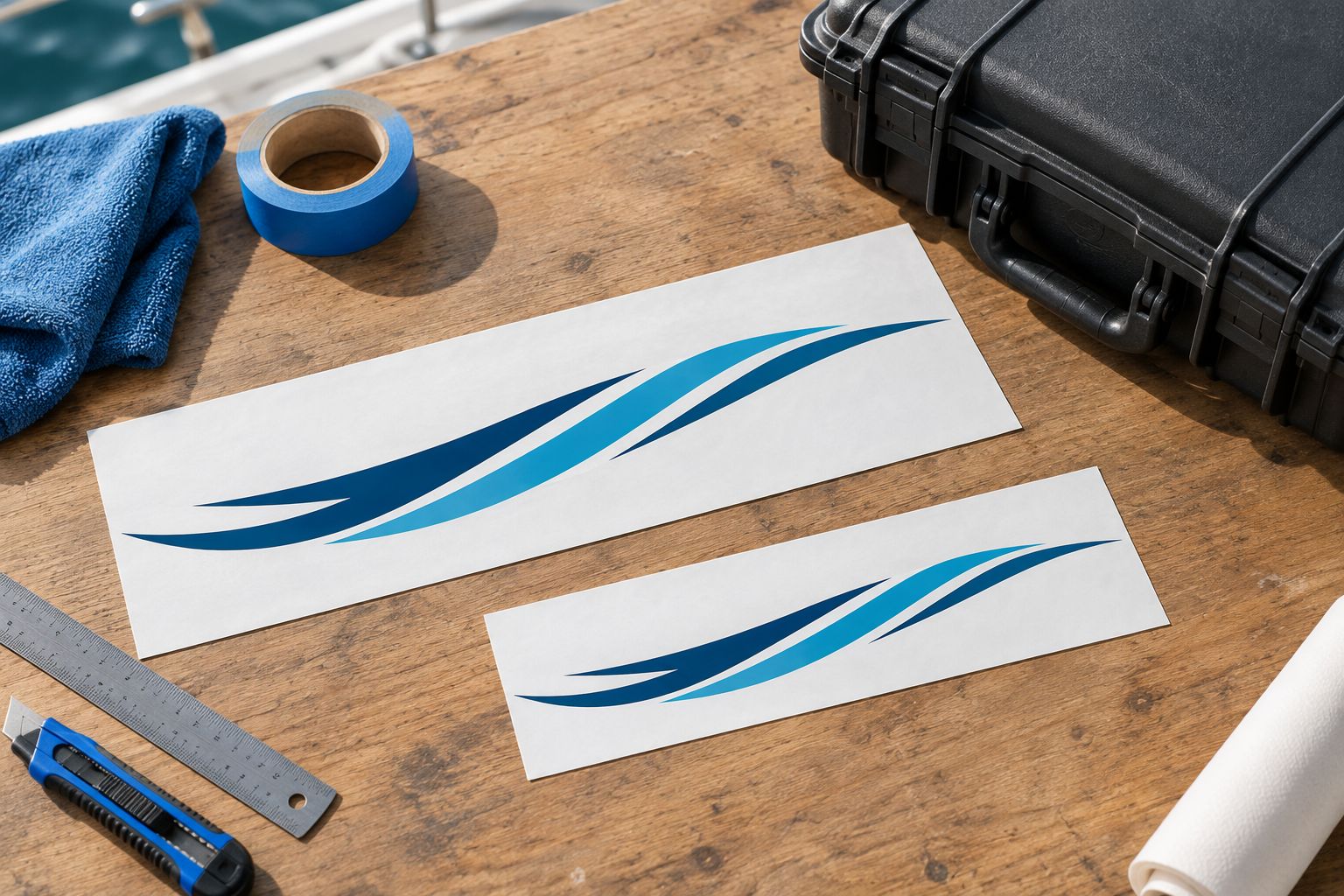
Best for: Marine businesses that need a recognizable printed logo with a custom silhouette.
Verdict: Buy for shaped business artwork; hold any exposed boat application until material compatibility is confirmed.
3. QR-code stickers: best for dockside information
A QR-code sticker connects a physical location to a destination such as booking information, operating instructions, or a service request page. It works as an access point, not as a graphic people should scan from a distant moving boat.
Choose a stationary placement where the intended user can approach safely. A booking code at a dockside check-in point serves a different purpose from a decorative decal on the outer hull.
QR-code sticker pros:
- Gives visitors a direct route to a selected page.
- Supports practical actions such as opening instructions.
- Reduces the need to reproduce a long web address in the artwork.
QR-code sticker cons:
- Glare, distortion, obstruction, and poor contrast can interfere with scanning.
- A working code is useless if its destination is incorrect or inaccessible.
- Small or awkwardly positioned codes are difficult to approach and use.
Ordering advice: Keep a clear quiet zone around the code. Avoid placing decorative artwork inside that space, and test the actual destination on a phone before approving the proof.
Print the artwork at 100% scale for a physical mockup. Test it at the intended location, including the viewing angle and lighting. A successful scan from a large image on a monitor does not establish that a smaller printed version works.
If the destination changes during your 2026 season, check whether the existing code still opens the correct page. Do not assume an already printed code updates itself.
Best for: Charter operators, marinas, and service businesses with a specific dockside action to offer.
Verdict: Buy for accessible, stationary scan points; skip locations that require scanning at a distance or while moving.
4. Circle stickers: best for repeatable equipment labels
Circle stickers provide a consistent boundary for a compact logo, short identifier, or simple equipment message. They suit a repeatable labeling system when each item needs the same basic layout.
A circle is a shape choice, not a durability classification. Select the material for the equipment’s surface and exposure separately.
Circle sticker pros:
- Creates a consistent layout across repeated labels.
- Fits compact emblems and short messages.
- Makes artwork placement straightforward within a defined boundary.
Circle sticker cons:
- Wide wordmarks leave unused space above and below.
- Long instructions become cramped.
- Small circles can force essential lettering below a readable size.
Ordering advice: Put the most important information in the center and inspect it at actual size. If you need a paragraph of instructions, change the format or move the detailed instructions elsewhere rather than shrinking everything.
Vinylstatus offers circle stickers for custom artwork. Separate equipment-label quantities from promotional quantities so a giveaway order does not consume the labels reserved for operational use.
Best for: Marine businesses applying a consistent compact mark to suitable equipment, packaging, or sheltered placements.
Verdict: Buy for compact, repeatable labels; skip the circle when the artwork needs a wide horizontal layout.
5. Holographic stickers: best for marine-business giveaways
Holographic stickers add a reflective visual effect to printed artwork. Their clearest role in this guide is promotional: a marina event handout, charter-business giveaway, or branded packaging addition.
That recommendation concerns the visual format. It does not establish that a particular holographic product belongs on a boat’s exterior.
Holographic sticker pros:
- Adds a reflective effect to the design.
- Gives simple artwork another visual element.
- Provides a distinct promotional format alongside standard printed stickers.
Holographic sticker cons:
- The effect can compete with small text and detailed artwork.
- Changing reflections can alter how the design appears.
- Decorative appeal does not establish marine-use suitability.
Ordering advice: Decide which parts of the artwork should carry the visual effect. Ask how the artwork will reproduce on the selected material, then review the proof for legibility rather than approving it for novelty alone.
Keep required identification, operating instructions, and scan-dependent graphics focused on readability. A promotional finish should not make an essential message harder to use.
Best for: Marine businesses ordering promotional stickers whose main job is brand recognition.
Verdict: Buy for giveaways; skip holographic effects when uninterrupted readability is the main requirement.
How these decal types were ranked
The order follows the buying task: boat identification, business branding, customer access, operational labeling, and promotion. Each format has a distinct role rather than competing for an unsupported overall durability award.
The selection criteria are surface compatibility, exposure suitability, readable artwork, application complexity, useful quantity, and proof accuracy. No shape or finish earns a marine-performance claim by itself.
Turn the choice into a useful order
Before approving a 2026 order, work through this sequence:
- Placement: Record the surface, usable area, curves, and obstructions.
- Artwork: Check spelling, logo detail, contrast, and physical dimensions.
- Proof review: Request clarification about cut lines, borders, or reproduction before approval.
- Quantity: Count the actual placements and planned handouts separately.
- Timing: Confirm the production schedule and shipping time as separate parts of the deadline.

For an exposed application, send the supplier a photo and a plain description of the surface and conditions. Ask a direct question: is the selected material suitable for this placement? Use the contact page to discuss the intended application with Vinylstatus before placing the order.
Which custom boat decals should you choose?
Start with cut-vinyl lettering for a name and printed die-cut stickers for a business logo. Choose QR-code stickers only when the placement supports a practical scan. Use circles for compact repeated labels and holographic stickers for promotional artwork.
For a small marine business, Vinylstatus is a custom printed sticker option for logos, packaging, and giveaways. Keep hull suitability as a separate purchasing check, not an assumption attached to the word vinyl.
FAQ
What are the best custom boat decals for a business logo?
Printed die-cut stickers suit business logos that need a custom outline and multicolor artwork. Confirm the selected material’s suitability for the boat’s surface and exposure before ordering.
Is cut-vinyl lettering better than a printed sticker for a boat name?
Cut-vinyl lettering suits a boat name when the letters themselves form the design. A printed sticker suits artwork that needs a printed background, illustration, or multicolor logo.
Can any vinyl sticker go on the outside of a boat?
No. Confirm the specific material’s suitability for the surface, sunlight, spray, cleaning products, and intended water exposure. A vinyl label alone does not establish marine suitability.
What size should I order for a boat logo sticker?
Choose the size from the usable placement area and the artwork’s readability. Compare full-size paper mockups on the intended surface before approving the dimensions.
Where should I put a QR-code sticker at a marina?
Place a QR-code sticker where a person can approach safely and scan it while stationary. Check contrast, the quiet zone, viewing angle, and the actual destination with a real phone scan.
Are holographic stickers a good choice for boat registration markings?
Choose required registration markings according to the responsible authority’s current rules, not a decorative finish preference. Holographic stickers are a promotional option, not a substitute for checking those requirements.
What should I check before approving a custom sticker proof?
Check spelling, dimensions, cut lines, borders, contrast, and small-text readability. For QR-code artwork, also verify the encoded destination and scan a physical-size mockup.
One last thing
A decal can fit the available space and still fail its purpose. Before your 2026 order, stand where the reader will stand: on the dock, beside the equipment, or at the check-in point. If the name, instruction, or code does not work from there, revise the artwork before approving it.